Don’t spread the bullshit

Since the pandemic started I have seen family members and friends on and off social media latching onto conspiracy theories in a never-ending cycle. What I found funny at first, like believing there is a magnetic chip in the anti-covid vaccine because your government is trying to control you or that this whole thing is a plot from Bill Gates, is no longer laughable.

Conspiracies and fake news. Even in war. Because there are two sides to the story: a Russian one and a Ukrainian one. Russia is clearly saving Ukraine from nazis and Ukraine is attacking and killing Russian ethnic groups – which means that this invasion is not an invasion but a heroic attempt from Russia to save its neighbour. Yeah right.

When did facts no longer matter? Did Russia invade Ukraine? Yes. Was this legitimate? No. Are there nazis in Ukraine? I’m sure there are nazi sympathisers everywhere including in Ukraine. Does this make them all nazis? No. But what about the US, they say, they’re not any better. Please spare me the “whataboutism”. Because if we go down that road, it’s pointless to even have a discussion. The USA f****d up in Iraq, in Afghanistan, in Vietnam, in Libya. Basically in every country they interfered. Was the US right to support dictatorships in Iran and Latin America? Hell no. If I condemn Russia for invading Ukraine, am I siding with the American foreign policy? Hell no. Are most Russian media spreading the regime’s propaganda and misinforming the local population? Yes they are. So you’re saying that the western media has always been non-biased? No, not at all. I never said that. Does the West have more independent media that will go at length to share facts with their readers & viewers? Yes. I come from the least democratic region in the world, where media is politicised, not reliable and totally controlled. Those few journalists who try to write it as it is end up dead or fired or just leave the country. So you can understand why I appreciate reliable media.

But (there’s always another but) look at how Europe is embracing Ukrainians fleeing their country. Why were Syrians, Africans, Afghans and other non-white refugees treated differently? I am not a policymaker so I will not answer this question but I surely don’t like Europe’s double standards. I find it sad and disgusting. So the west is not perfect, I told you. No it’s far from perfect. But there’s a reason you came here because this is where you can have a better life, or was it maybe that you didn’t have a choice?! You’re at least in a part of the world where you won’t be sent to jail for 15 years for saying I don’t like my president. Or I’m gay. Democracy is real. It is not perfect, but it is the best system we’ve had so far. It is where you get to choose which newspaper to read, which TV to watch and you make your own conclusions. Journalists are not meant to tell you what to think. They don’t make policies. You do, when you choose who to vote for. Journalists are messengers who go to Ukraine and Russia and other countries to see what is happening up close. As a friend (hi Roel!) puts it nicely: if you don’t like the way they report on Ukraine, why don’t you move your ass and go there to check for yourself with your big mouth?

For those of us lucky to be living in a civilised country, who come from countries where human life has no value, we should not forget why we left. Don’t resent the country you’re living in but the country you came from. It basically kicked you out. You were never welcome there.

For those of us living in Europe, yes, Europe is not perfect. There is racism, fascism, discrimination, inequality, poverty. But take a moment and look where Europe came from. A couple of generations ago, France and Germany were at war. Look at the rest of the world, the Middle East, Africa, Asia, Latin America. Autocrats, militias, corruption (lots of it), dysfunctional societies, oppression, women’s rights? Non existent. You might say colonialism contributed to that. You might say the west is purposefully keeping the rest of the world on its knees. You might say the west has lost its moral compass and values. We at least have family values (which is bullshit by the way). I won’t keep going because there is no point. I do agree we have to understand the past to build the present and the future.

Seeing these posts on Twitter and Facebook trying to analyse how we got to the war in Ukraine will not help solve the current situation. This is, as we say in NGO jargon, a lesson learned. And for those who do have access to decent media because they live in free countries, what’s your excuse not to read The New York Times, Le Monde, La Libération, De Volkskrant, Der Spiegel and others? Because you have a responsibility to stick to facts. You are more to be blamed for spreading misinformation. You have the opportunity, the means and the access to the truth and yet you make a conscious decision to promote conspiracies. That’s either stupid, sick or both. In all cases, there’s something wrong with you. And please don’t start arguing why you are not vaccinated. Oh wait, this is probably a different group. Oh man, the end must be near.

Stemmen op 17 maart 2021 – gedaan!

Vandaag heb ik voor de eerste keer in mijn leven gestemd. Niet in Libanon, waar ik vandaan kom, maar in Nederland. Vier jaar geleden, toen ik net naar Amsterdam was verhuisd, kon ik niet stemmen. Ik twijfelde tussen GroenLinks en D66. Dit jaar heb ik naar bijna alle debatten tussen de verschillende partijen en hun programma’s gekeken. Ik twijfelde nog: ga ik voor PvdA, die hun stemmers in de vorige jaren teleurgesteld hebben? Of voor GroenLinks? Die zijn te “politiek correct” en dat lijkt me soms onrealistisch. Of D66, die om eerlijk te zijn oorspronkelijk mijn voorkeurspartij waren? 

Nee, niet met Sigrid Kaag als lijsttrekker. Toen ze in Libanon werkte als UN Special Coordinator for Lebanon, heeft haar bureau een e-mail gestuurd naar alle VN werknemers (inclusief mijzelf) om ons te verbieden om een deel te nemen aan de betogingen tegen de corruptie van de Libanese regering in 2015, en hun slechte aanpak van de afvalcrisis. Dit vond ik ondemocratisch en een beetje hypocritisch van haar. Als Libanees had ik het recht om te demonstreren. Dit zou niet in Nederland gebeuren bijvoorbeeld. Ik had ook hetzelfde gevoel toen ik naar één van Kaags interviews luisterde: ze zei dat het ze geen nee kon zeggen tegen een ‘eerste’ baan bij Shell, ondanks dat dit bedrijf activiteiten had in Zuid-Afrika tijdens de apartheid. Dus voor mij was ze niet iemand die echt staat voor principes. Het ging over de omstandigheden; dit is de houding van diplomaten. Een partij leider is geen diplomaat maar een politicus.

Voor wie heb ik dan gestemd? Volt. Een nieuwe partij die net is begonnen in de politieke sfeer en die Europa steunt. Daarin geloof ik, vooral om dat ik uit een erg verdeeld deel van de wereld kom. Een sterke EU is belangrijk voor de groei van Nederland. Ik wil ook een kans geven aan een groep mensen met nieuwe ideeën, net als ik een kans kreeg toen ik naar Nederland kwam. 

Corona: happier dogs

I never thought I’d witness an actual pandemic in my lifetime. I mean, the last one was the Spanish flu in 1918!

Although life is currently not normal and after coronavirus has passed, we may find that life never fully returns to “normal”, it has slowed me down; in a good way. It made me embrace the comfort of my home, and realize that connecting with family and friends is very important not only for my sanity but also for the satisfaction and joy that sharing and caring bring.

Looking back at 2020, I feel lucky, although the inability for me as a Mediterranean to gather with other people, to hug, kiss, and eat together is obviously difficult. The toll corona took on people around the world is completely disproportional. Those who are poor got poorer. Those who are rich got richer. Those who were lonely feel even more lonely. That man who beat his wife (there’s a special place in hell for those) has been abusive more than ever. Only dogs seem happier to see their owners at home pretty much 24/7.
What is also interesting is all the conspiracy theories in the time of corona. It. Is. Madness. Some believe that Bill Gates is responsible for COVID-19, or that the vaccine will contain a tracking microchip that will be injected in you (or both); or that governments are imposing lockdowns to control the people (definitely true in some parts of the world, like my home region the Middle East, always a winner when it comes to repression, but not here in Europe) or simply that the virus does not exist – it’s in your mind – as some yoga / life coach posted on Facebook. How is that more logical than just believing that corona exists and due to stupid human behavior, it started somewhere in China (could be Wuhan market or elsewhere, who knows) and then spread to the rest of the world?! In some countries, including the Netherlands, a group of people demonstrated against their “oppressive” government. Seriously? Have you been to Egypt, Syria, Iraq, Russia?

I honestly hope that this collective experience will change our relationship with nature – that we think about how we deal with wildlife and their habitats. I also hope that we focus more on what matters: family, friends, the community we live in – human connection (not only virtual) in general. 

What I hope sticks around after the pandemic is tolerance, support and empathy for one another as well as working from home (at least sometimes) and hand sanitizers (touching that restaurant bathroom door handle then eating your burger with your bare hands is disgusting).

My dog leaving paw prints in the snow all over the balcony.

Beirut is broken

One month after the devastating explosion in Beirut, the terrible news keeps coming: people still trapped under the rubble (one thought to be alive!), others missing, more than 150 dead and 6000 injured, hundreds of lost pets and countless restaurants, cafés, shops and other local businesses completely destroyed. 

Since I left Lebanon four years ago, I never felt as sad and angry as I did in the past month. It’s been a roller coaster of emotions. I clung to Facebook, Twitter, Lebanese TV channels (which I never used to watch even when I was in Lebanon) and international newspapers in an attempt to understand how this disaster happened and, more so, not to miss a single story, since four August. Fear for my friends and family (none of whom are ‘okay’, but at least they’re safe and alive) and sadness about the fate of my people turned into anger at this disgusting, incompetent and rotten political class as well as at those who are loyal to them; then into frustration and helplessness for not being physically present in Beirut.

Besides the tragic and heartbreaking stories I saw — about mothers and fathers losing children, spouses and siblings being buried, classmates, friends, colleagues, passers-by or people at home maimed while going about their day, business owners losing their entire life’s investments, houses that are no longer habitable (more than 300,000 people left homeless), cars completely destroyed — it was and is painful to see friends and acquaintances who have dedicated their lives to making their passion a reality, be it through museum exhibitions or theatre or art or music or festivals or poetry or anything else that gives meaning to life, lose it all. They offered it to everyone else in the society to celebrate and enjoy, and now it is gone. 

A few days after the explosion came the feeling of guilt. For living in a functioning country, for having good roads, electricity, water, health care, education, freedom and accountability. It is almost perfect. There is barely anything to complain about. I felt privileged. Why me? After that, anger surfaced again, this time at those around me moving on with their lives like nothing happened. I felt like yelling: Beirut is destroyed! Don’t you see? Nothing meant anything anymore. On a Saturday morning, I had a long run for Beirut, wearing a T-shirt from the 2015 Beirut marathon. I wanted people in the Vondelpark to see the word Beirut, to think about it.

I spread the word about which organizations to donate to, individual Lebanese who needed help rebuilding their shops and restaurants. I talked a lot with my family in Lebanon, trying to understand the present and the future. Where did the ammonium nitrate come from? How long has it been there (since 2013)? Who stores fireworks next to such an explosive material? Are we sure it was not an Israeli missile? Was Hezbollah storing weapons there? Will any politician or senior government official be held accountable? If so, when? What’s the scale of the destruction (more than you can imagine)? How does my street look like (you won’t recognize it)? Is the apartment I lived in damaged? Do you know if the two old ladies running the small shop in Mar Mikhail street were hurt (they’re alive)? How is the situation with corona after this catastrophe (hospitals are overwhelmed)? Are NGOs getting the aid money or the government (bunch of thieves)? What can I do to help from The Netherlands? Do you think I should come?

There was no more talk about hope and resilience, about Beirut the city that is full of life despite everything, yadda yadda yadda. Only misery across the country. Will this bring any change? I doubt it. But I can’t see how it can get any worse. So it must get better.

I retweeted this image a while ago – (if you know who the designer is, please
mention him / her in the comments).

Big in Japan – Part IV

(This is the last part, I promise)

A long time ago – I’m getting old – in my second year in high school, I had to choose a branch of study. I originally selected maths and physics but because we were only two girls students enrolled, the school did not agree to start a class. The next year, a class was made available for two boys students (gender equality, sorry what?). I went for biology and chemistry instead. That’s when I also learned about radioactive chemical elements, nuclear energy and what happened in Hiroshima. In my mind, it was a dead city where nothing can grow or live. A place that was destroyed and deserted.

I stepped out of Hiroshima train station on a sunny morning and life seemed pretty normal, with almost a Starbucks at every corner, and a Zara here and there. It was a working day so the centre of the city was bustling with people in suits waiting for buses and metros. Along the river, you could see a ferry cruising right in front of the A-bomb dome which is the only building still standing from 1945, when the atomic bomb was dropped by the U.S. The dome looks like the skeleton of a man, a reminder of how destructive war can be and how painful and lasting its repercussions are on people. The museum, the dome and the memorial park leave you silent. At every corner stands a statue or a sign dedicated to those who suffered, survived or died during this attack. Paper cranes made by children from all over Japan and the world hang in one corner with a little girl’s voice telling stories on a recording in the background.  

The museum displays belongings left by victims, testimonies of survivors and A-bomb artifacts, mostly materials that are related to the A-bombing. After three hours of looking at pictures, reading stories and listening to recorded testimonies, I looked blank. What happened has traumatized more than a generation. But somehow, there were signs of hope. The city has moved on and its people have picked up their lives again. Trees were blossoming, parks were green, some boats were cruising down the river, sellers were shouting out their prices in a public market. The peace memorial was a reminder of the scale of destruction that a nuclear bomb brings and of the necessity to stop it from ever being used again. 

My next and final destination before heading back to Tokyo was Yamanakako, one of the largest lakes at the base of the majestic Mount Fuji. I was not lucky with the weather – it was cold and humid when I arrived. My attempt next morning to have a glimpse at the top of Mount Fuji at 5 a.m. failed as it was surrounded by clouds. The small town where I stayed was very quiet, as it was off-season. There were only a couple of restaurants open. During my time there I cycled around the lake, gazing at the majestic Mount Fuji. I played chess and monopoly over sake with a group of Japanese in the guest house I was staying at. I made long walks along nearby parks and tiny villages, had delicious sushi from a supermarket on a bench in the middle of nowhere. A very relaxing way to end a long trip.  

———————————–

Here are some tips about Japan:

In some onsens – Japanese hot springs and bathing facilities, people with very visible and large tattoos are not allowed in. Tattoos are negatively perceived in Japan due to their association with yakuza, a criminal gang.

The shutter sound of the iPhone camera cannot be silenced in Japan because of a law prohibiting ‘up the skirt’ photography. Such incidents have also led to the creation of separate women’s train compartments marked in pink.

Ah the modern toilets. Needless to say, you have to try Japanese toilets. Spend some time in there and just experiment by pressing the twenty something buttons; enjoy!

Women’s fashion is highly diversified ranging between pop culture style to elegant, colorful and young. My favorite shop is Apart by Lowrys. Interesting hairstyles with many women having bangs. This obviously prompted me to have one of my own.

Food is delicious. Try yakitoris or skewer restaurants; sushi at Genki sushi in Tokyo where you place your order on an iPad and sushi appears on a belt; and ramen, you will not get enough it. 

The bowing culture. There is so much modesty and respect in this gesture. One funny moment was when a a two year old girl on the plane back to Amsterdam kept bowing every time I looked at her. She could not even speak yet. 

Japan is timely and Japanese are disciplined: they stand in line and wait patiently. Trains, trams, metros and buses arrive on time, every time.

I felt very welcome in Japan because people were always friendly and helpful even when they did not speak English. A friend told me that living there as a foreigner though is a different story. Locals tend to keep to themselves and do not open up as easily as they do to tourists.  

Big in Japan – Part III

Have you ever watched sumo wrestling? 

When I heard of the grand sumo tournament happening in Osaka I thought I needed to get tickets. They were sold out online so the only way was for me to get up early in the morning (five a.m.) and queue hoping for a ticket. And it worked!

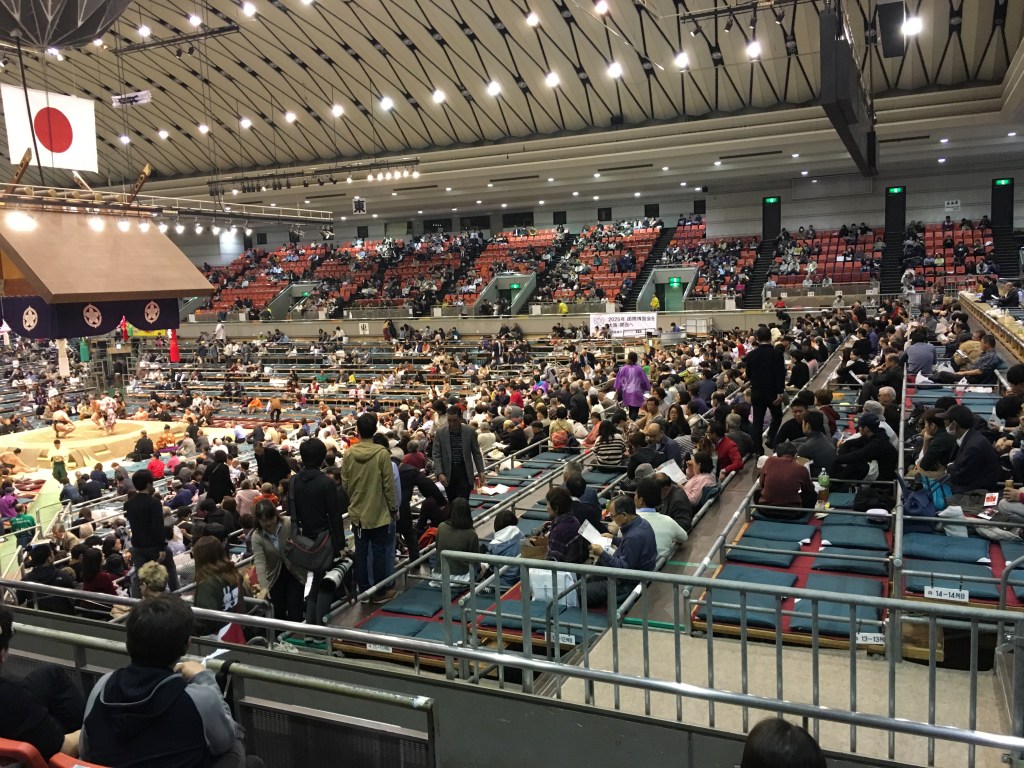
The crowd started small at nine in the morning to watch junior fighters compete. In the afternoon more skilled and high-ranked wrestlers faced each other, which made fights more exciting. Those who had more wins than losses in the game moved up the hierarchy while those who lost got demoted. The winner was handed a closed envelop (probably cash) at the end of every match. I tried to get more information about the rules of the game from Japanese spectators. One big sumo fan university student explained that the game was all about “pushing” and “pulling”. In both cases, a player aims to destabilize another by either making him fall and touch the ground or kicking him out of the ring. 

Sumo wrestlers had to put on weight and were asked in stables, which are accommodations where they lived and trained, to eat certain types of food and drinks including a high-in-calories stew. It is not until many of them suffered from diabetes and others died at the age of 65 (which makes sumo an unhealthy sport – ironically) that rules became a little more lenient. The concluding match took part that day late in the evening. After a long introduction of who the players were, their ranks and them posing with the mawashis they were wearing (check the photos below), it took only a couple of seconds before one of the wrestlers got thrown out of the ring. That was the end – I literally spent about 12 hours watching sumo wrestling waiting for the final match which ended in like 10 seconds.

While you’re in Osaka, Osaka castle is totally worth a visit. It is one of the biggest in size in Japan. Major battles between different clans including shoguns (rulers appointed by the emperor) were fought there. The castle has been destroyed several times to be rebuilt again, kind of symbolizing the rise and fall of the country’s history. The outer moat and tower give you an idea on how this building must have been besieged back in the 1600s.

Because no distance is too far in Japan, I made two trips from Osaka: to Kobe, which reminded me so much of the coastal city of Jounieh in Lebanon with its green mountains looking down onto the sea. I walked around its small hills where you can still see western designed houses. These go back to the 19th century when the city opened up to foreign trade – and Japan was forced to come out of its isolation. Most European style houses were inhabited by foreign merchants and diplomats. Starbucks managed to use one (damn it!)

When I walked into a local standing bar, waitresses and clients started cheering – a tradition that always makes you feel welcome and want to drink more. I had a couple of beers with two Japanese salarymen. Luckily one of them spoke English so I started bombarding him with questions about the country. He was very much pro-peace and said “although Japanese people have concerns about North Korea and China, most of them don’t want to go through war again”. This was in response to my question about article 9 – which is “a clause in the constitution outlawing war as a means to settle international disputes involving the State”. However, he was not happy with Japan “being dependent on other countries for its security or having several US military bases”. He recommended that I visit Hiroshima – which I was going to of course – and that I try the Kobe beef steak while I’m here. I did; medium rare with nothing more than pepper and salt. It just melts in your mouth with its soft, succulent flavor. The next day I took the early Shinkansen to Hiroshima, 330 Km away from Osaka (and back in one day!). 

Big in Japan – Part II

Kyoto station is out of this world. It is an attraction eleven stories high, packed with shops, bars and quality restaurants with views over the city. It has a very futuristic design with a curvy metal roof and “sky walkways”. You can walk slowly up there and enjoy the stunning night view of Kyoto. Underneath is another endless underground mall with its own ‘restaurant street’. I have never seen a train station that is a fun place to hang out. And people do: they go to the station to have a romantic dinner. Kyoto made what is in many cities a magnet for street crime into a popular local hotspot. It says a lot about how the Japanese manage their society: planning, design, cleanliness, quality.

Kyoto is a more compact city than Tokyo. It has a relaxed atmosphere and people seem less stressed and hurried. It is a perfect place to cycle as it is mostly flat with reasonable traffic. In Tokyo, cyclists were going on side walks which was always confusing to me.

It was the beginning of the blossom season in Kyoto and I was lucky to see blossoming trees around the colorful shrines and temples I visited. There are hundreds of them, so again get the Lonely Planet and pick what you want to see. Before leaving the city, I stopped at Fushimi Inari Taisha, a series of orange arcades that make up a shrine on a mountain. One temple and one shrine, that was it for me. I walked around Nishiki, the city’s public market where I tried a variety of exotic pickles, fish, meat and sweets. Rain was my excuse to spend long hours there and taste all I can eat.

In the evening, I strolled down Gion, the geisha district, hoping I see one. I managed to get a glimpse of two who vanished quickly behind closed doors. A geisha is a traditional female entertainer (not prostitute) for men. Her work includes talking about arts, music, poetry, politics and also dancing. Not too far from this quarter are many nice bars in alleys – most of them with a cover charge. 

At the base of Kyoto’s mountains to the west is the Arashiyama Bamboo forest, reached by walking through a temple. It is a perfect place for photos, with the rays of light falling through the very tall bamboo trees. I gave it up soon enough though, as it turned out to be impossible not to have a tourist taking a selfie in the picture. Next to the forest is an amazing Japanese garden, built by a famous Japanese samurai-actor in the sixties. It is endless perfection, with plants manicured and positioned to flank the most beautiful views of Kyoto while you make your way on a meandering garden path. The amount of work that must be put into keeping it neat and pretty is unbelievable. 

On my last sunny day in the city, I joined a group of Japanese who were having a short getaway in Kyoto. We took a three-hour boat trip gazing at the beautiful scenery in the valley, watching trains passing on bridges above the river; trees covering the mountains on both sides – it reminded me a bit of Nahr Ibrahim in Lebanon – until we arrived back to Kyoto.

Four days later, it was time to go. While waiting for the subway to catch a bullet train to Osaka, a couple of 7 or 8 year old kids in their school uniforms were taking the bustling subway by themselves. I looked around, there were no adults with them. I was almost tempted to ask them if they were lost or looking for their parents. Then I understood that it is common (and safe) for very young children to meet their parents everyday after school. 

Thirty minutes in the Shinkansen and here I was in Osaka (about 55 Km away). It is amazing how much distance doesn’t matter when you have a functioning transportation system. This reminded me painfully of all the hours I wasted in traffic jams in Beirut. At Christmas it took me up to two hours to get from Hamra to Ashrafieh (7 km) by car – totally insane.

More on Osaka and other places in my next post!

Big in Japan – Part I

Going to Japan was a “not anytime soon” type plan for me. It is a bit out of the way (12 to 14 hour flight from Amsterdam), it needs time and money. But it happened that I had all that this year and I thought: it must be a sign. Yeah, I’m one of those. Besides, I got my visa so easily – I still need to apply for visas, it’s not over yet – which meant I had to go.

Despite a horrible jet lag after a very long trip, I hit the streets of Tokyo: a city that knows no limits. You’ll probably need two lifetimes to see its main (big!) areas and visit all the restaurants, pubs, karaoke bars, museums, shrines/temples and manga comic stores. That’s when the Lonely Planet comes in handy because it helps you to be more selective and not lose your mind. There is just so much to see and do. 

Tokyo is overwhelming. Its glass shiny buildings are modern and huge. Its streets are incredibly clean although you barely see trash bins anywhere. I have never carried so much trash in my bag as I did during this trip. Everything was so clean. At a public fish/meat market, we did not see one single fly, literally – it makes you want to keep it that way. 

Indoor smoking was surprisingly allowed in Tokyo while it was illegal in undesignated public areas. The use of plastic bags was quite common every time you bought anything no matter how small in a shop or a supermarket. And the drinking. I thought Asians had more trouble tolerating their alcohol but it did not seem to be the case there. In all izakayas – small bars that can accommodate anywhere from 8 to 100 people who end up mingling together throughout the evening – salarymen and women still in work wear were drinking and chatting. Whenever I was heading out around 10 in the evening, I would see them heading back home, most of them looking exhausted or falling asleep in the subway. People seemed never to stop working: you don’t leave the office before your boss, and he does not leave either before his boss and it goes on and on. Some companies I learned have taken measures to block employees access to their emails starting a certain hour.

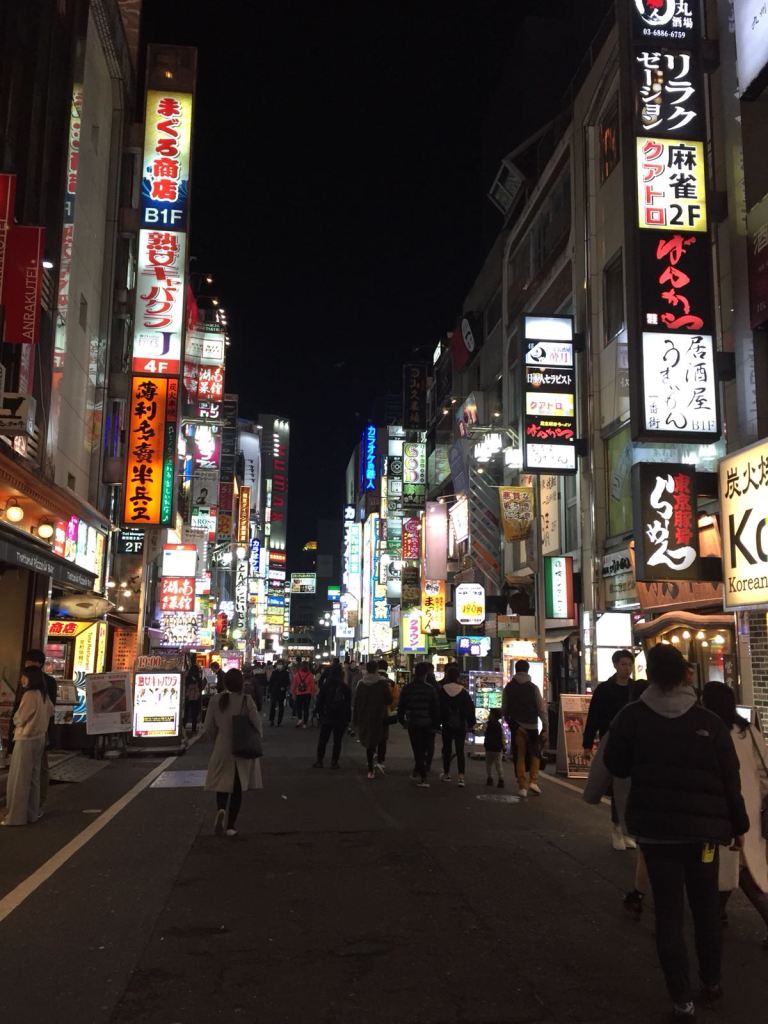
The city is so big that I felt very small, completely anonymous. It is very unlikely that you’ll ever run into a cousin or an ex there. Half of Tokyo exists in the form of subway and train stations. I got lost in stations due to the language barrier – not many people I met could speak English – but also because there were at least four or five exits to every station. The city has the most “polite and well behaved” red light district I’ve seen (okay, I’ve only see one, in Amsterdam). I wouldn’t have recognized it if it wasn’t for the “Sleep, rest or stay” sign at the entrance of so called love hotels and the many maid cafés. Apparently some bars hire women to cater to men or vice versa. I did not get the chance to know what actually happens in there. Maybe next time. Bright lights, music and ads are all over the place. Among the areas I visited were: 

Shinjuku: Several buildings are dedicated only to Karaoke – it’s quite a serious business there. It wasn’t long before I rented a cubicle, probably 2×2 square meters, for half an hour. You can shout all you want and drink all the beer you can, it’s almost therapeutic. Before 11:00 P.M. I took a walk towards the Tokyo metropolitan Government Building. Once you are at one of their highest floors, you’ll be able to have a free night view of the city and its towers – or you can also try Tokyo SkyTree and pay a little (a lot) more.

Shibuya: It is known for its famous crossing, where every couple of minutes several hundreds of people cross in all directions. It looks like the start of a protest, but it’s really just Japanese following the rules like a well-organized stampede of harmony. Tokyo subways run until 12:30 after midnight and it happened that I missed mine in that part of town. Taxis are very expensive so I used that as an excuse to spend the night roaming around between bars and clubs until the early morning. Speaking of taxis, the door behind opens like magic. You don’t even need to touch it. Harajuku, which is a street in Shibuya, is a must see for those who like funky, pinky and kawaii (meaning cute) styles. It is known for its fashion scene, cafés and bars which attract mostly teenagers and youths. There’s so much pink everywhere that you feel you’re in a  piece of bubble gum. 

Akihabara: I thought I had stepped into a futuristic cartoon movie or comic book. Posters with different Manga characters – comics created in Japan in the late 19th century – are everywhere. They include “normal” funny comics and at times even adult or teen porn comics. Female cartoon illustrations take different shapes and forms but mostly, show manga girls in “sexy” school uniforms. It’s THE fantasy. Entire buildings are dedicated to virtual reality games, video games, electronic stores, animation, you name it. A total nerd haven but incredibly fun.

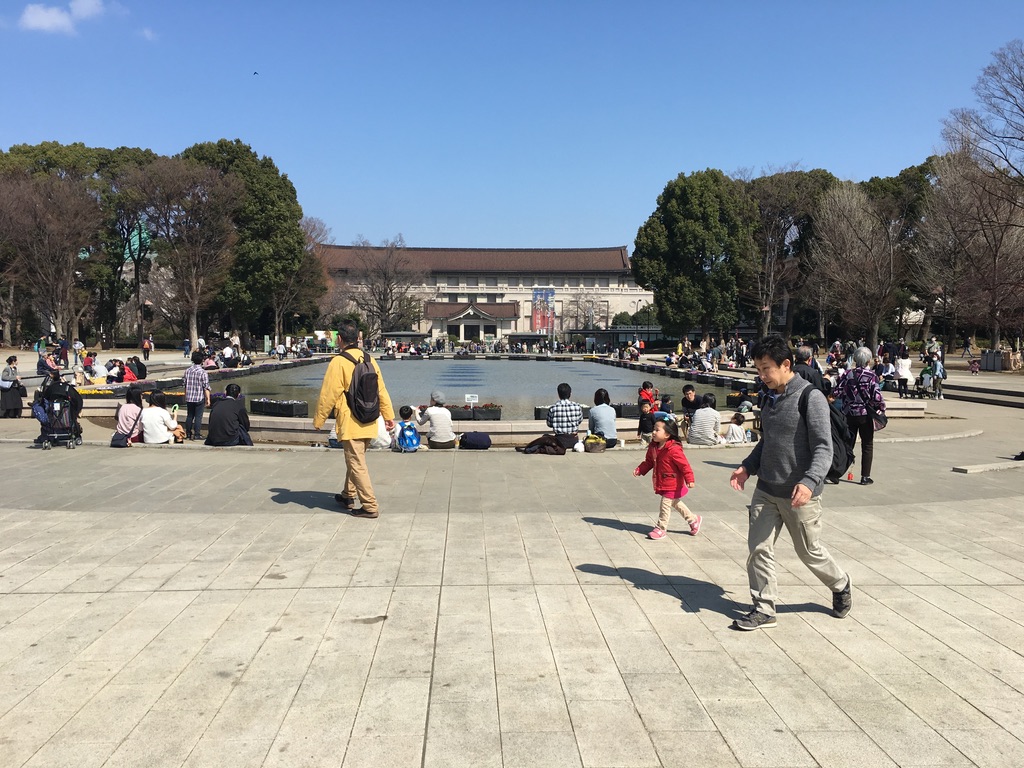
Ueno: This is where the Tokyo national museum is located (and a must see) in addition to several shrines and temples and a beautiful park. 

Ginza: Here you are close to the imperial palace and can take long walks along shopping avenues while making stops in elegant bars and cafés. I seized the opportunity to book a single Kabuki act, which is a classical Japanese dance drama. It was called “Kanda Matsuri”. The story was available in English on a small screen. Only men are allowed to play the role of Geishas. The music, white facial make-up and clothes were very exotic, to me at least. Photos are not allowed.  

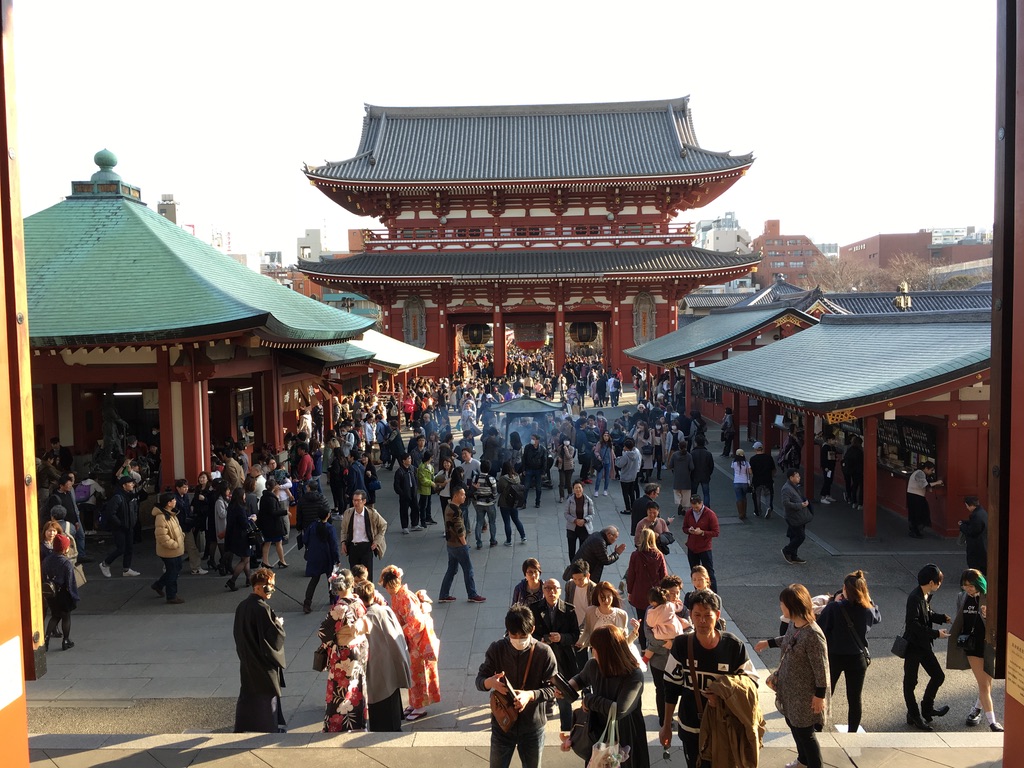
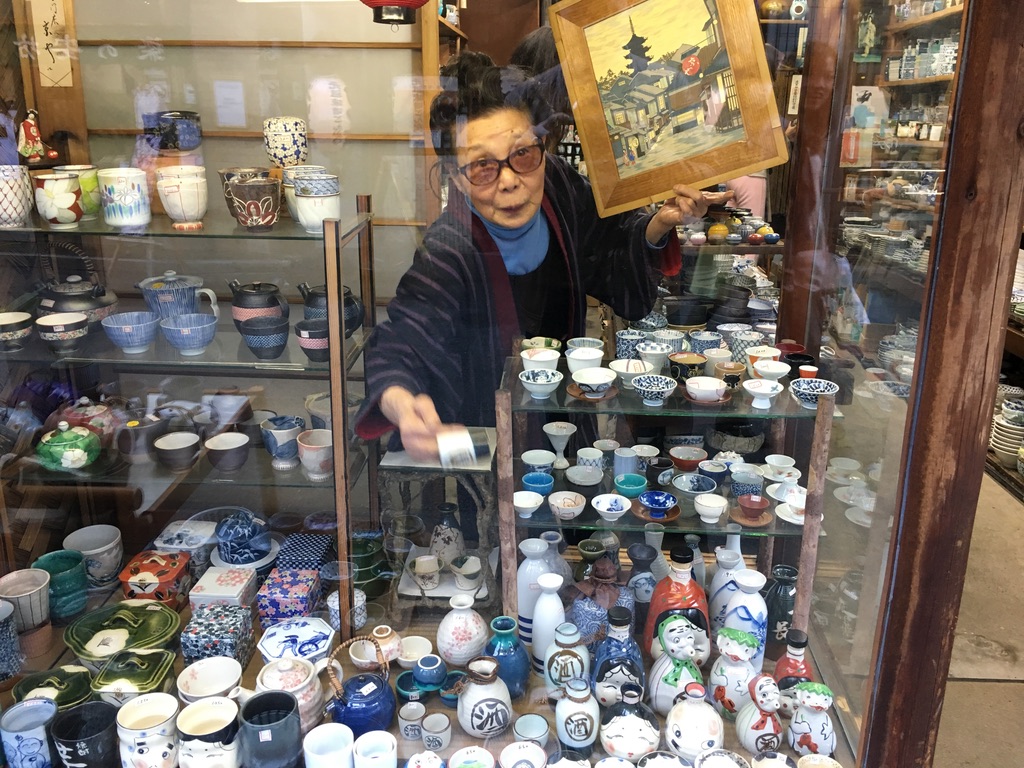
Asakusa, where the oldest temple of Tokyo is built: Senso-ji. I went there before sunset to enjoy the bright orange colors of the various buildings and visit craft, souvenir shops and eateries – got a cool sake set for home. 

I really enjoyed my time everywhere I went. There was always something new to see, to eat (I put on two kilos in one month) and to discover. Even when you thought you’ve seen one street, more small bars and restaurants would appear in hidden alleys. It was just endless.

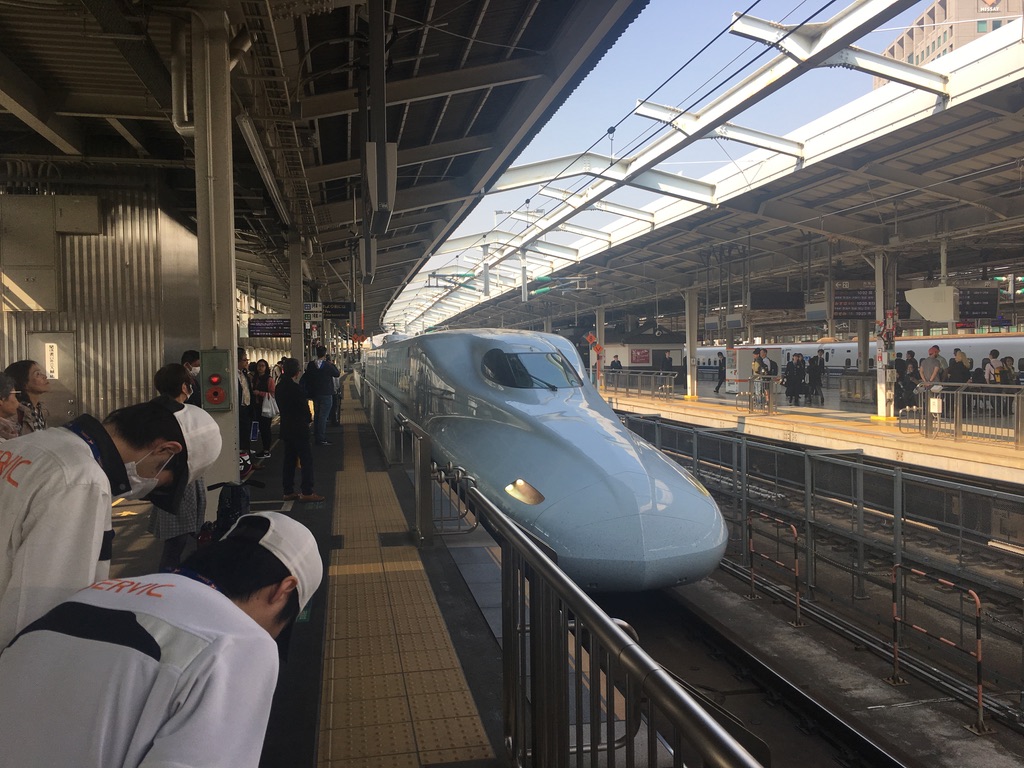
After seven days in Tokyo – which is not enough, I hopped on the Shinkansen or high speed train to Kyoto. And this thing goes like a bullet. It is very comfortable, clean and timely – not a second late (you can do better Holland!). In just a couple of hours, I was in Kyoto – after a very smooth trip and a glimpse on the way at Mount Fuji above the clouds.

A year in pictures

Looking back on the past twelve months: family time, travel, celebrations, love and nature

Meeting my sister at Amsterdam airport Schiphol. The feeling you get when seeing a loved one after a long time (a year or so) is an overwhelming happiness.
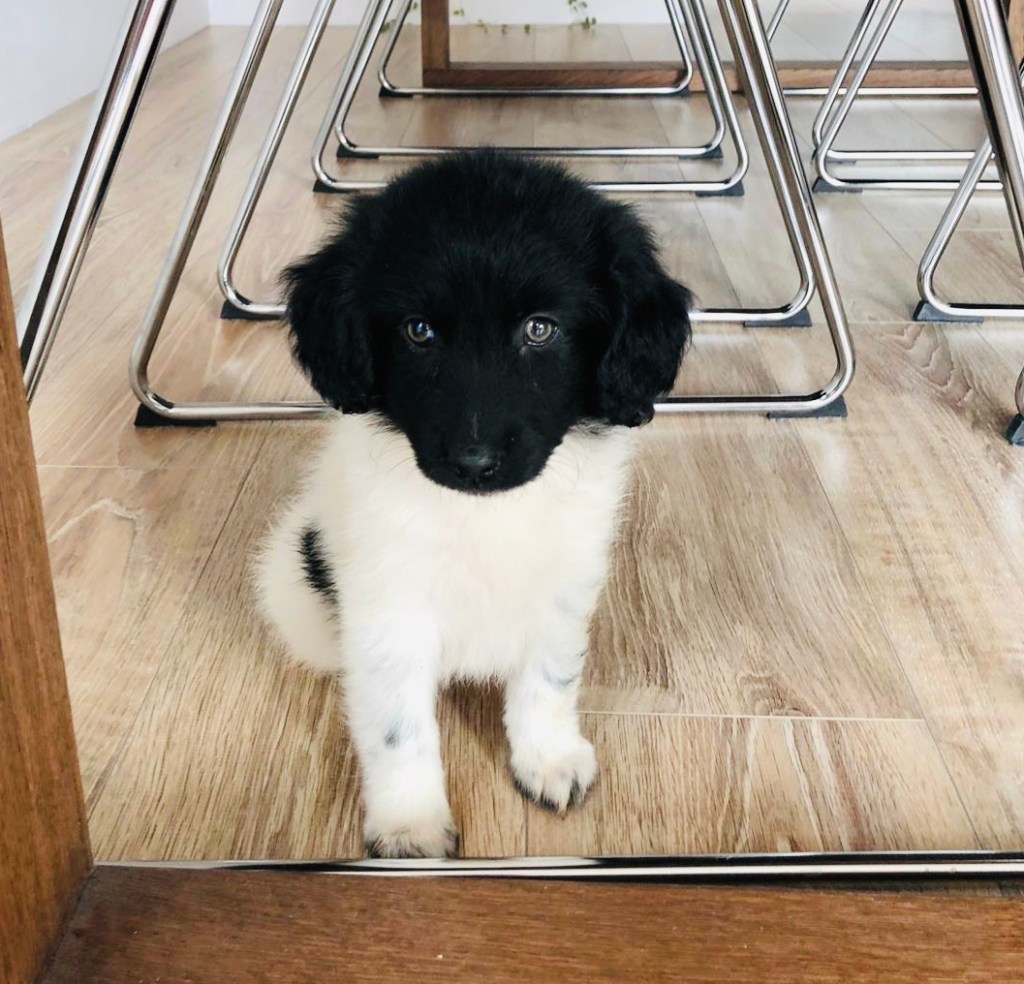
The new addition to the family: Wolf (a She wolf). Needless to stay, she is the cutest thing ever! A Stabyhoun, originally from Friesland in the north of The Netherlands, this furry friend follows me everywhere I go and watches every move I make. Wolfie (her nickname) is sweet, smart and a little stubborn on occasion.
King’s Day in Amsterdam in April. Everyone is celebrating the birth of the king. Some parade on boats in the canals with music, beer and orange accessories or clothes (Orange is the national color here – the color of the Dutch royal family – unlike in Lebanon, where it represents a certain party, which I don’t particularly favor – not that I favor any other).
This is a great book: light, fun and pretty straight to the point. That was not a bookstore. For some reason, the shop owner decided to display random items / objects in the vitrine. Nothing made sense and he just did not give a f**k.
If Amsterdam was a season, it should definitely be Autumn. It constantly feels like you’re walking in a painting. This photo was taken in Vondelpark, a must visit for a stroll, a bike ride, a book read or just to sit on the grass and enjoy the silence (as long as it lasts; it’s pretty busy in summer)
Maastricht, what a beauty. It is one of my favorite cities in The Netherlands; old and picturesque. The red stones of Saint John’s cathedral make it unmissable.
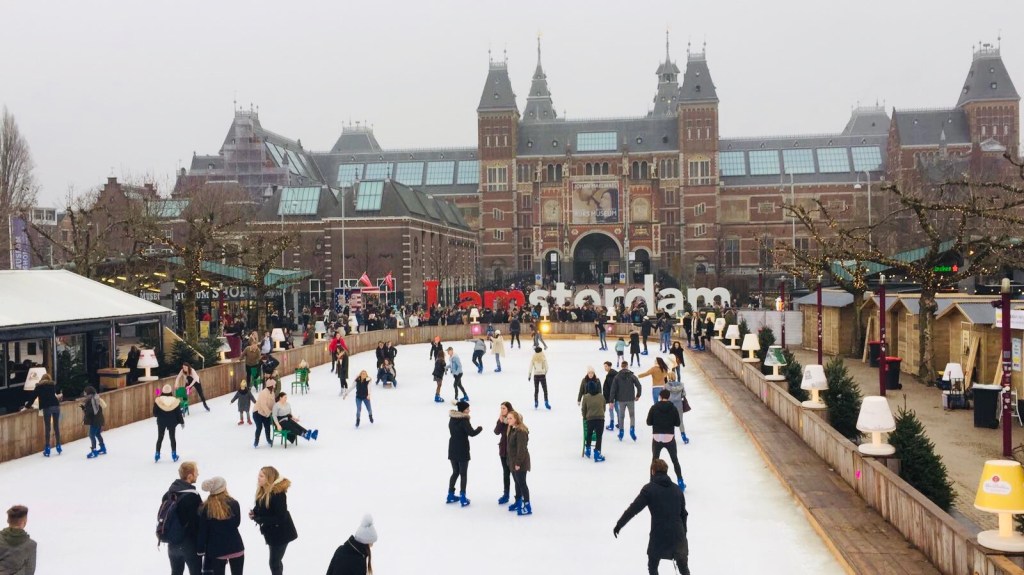
It’s beginning to look a lot like Christmas… Around the Rijksmuseum, you can smell hot chocolate, sausages, pea soup, glühwein and maybe skate. Using a chair is not frowned upon; no one expects you to skate like the Dutch.
I was riding my bicycle that day and for the first time I saw that the lakes were frozen. Small ducks were actually walking on ice. Again, I took this photo in Vondelpark.
The first time I was at the gay pride in Amsterdam was by chance in 2008, during a trip around Europe. It was amazing to see how free people can be, to be able to express themselves so openly. I am all for “extreme” (as a friend called such an event) celebrations of love if only to counter hatred towards the gay community in so many parts of the world. May love always win!
Salzburg, twenty years later. This city holds a special place in my heart. It is where I spent a three-months holiday with my sisters, met many interesting people, made friends and put on a lot of weight (thanks to schnitzels and potato salads). Those were incredible times.
Amsterdam by night. Doesn’t it look magical? I was told that all these lamps on the many canals of the city used to be lit by hand back in the eighteenth century. A walk by night here is a must to discover this place under a different light.
Save the best for last: the Bekaa valley. It is a high plateau between Lebanon’s two mountain ranges that serves as the country’s primary agricultural district. It is definitely worthwhile to visit the various towns and villages in and around it, to have lunch at a winery and enjoy the view. This photo was taken from Tawlet Ammiq restaurant.

Ghent

Imagine you’ve finished work on a Tuesday afternoon, and three hours later you suddenly find yourself in a different country. All you need to do is hop on a train from Amsterdam to the medieval Belgian city of Ghent – or ‘Hent’, as pronounced in Flemish which is a very cute version of Dutch. No borders, no customs and no need for a visa – something that I, as a Lebanese, can’t help but appreciate every time (Lebanon borders two countries: one is impossible to enter “Israel”, the other is too dangerous “Syria”. We also need a visa to almost every other country in the world).

Although I had booked a couple of weeks earlier, the day before traveling was a little stressful. I got annoyed for the first time with NS, the national public transportation sector here – for once joining the big chorus of Dutch complaining about their national rail road (although I still think that it’s pretty good, normally). Their website mentioned delays due to works on railways. It did not give alternative times or routes to take, particularly for those making international travels. Eventually, it all went well and we made it in a very short time.

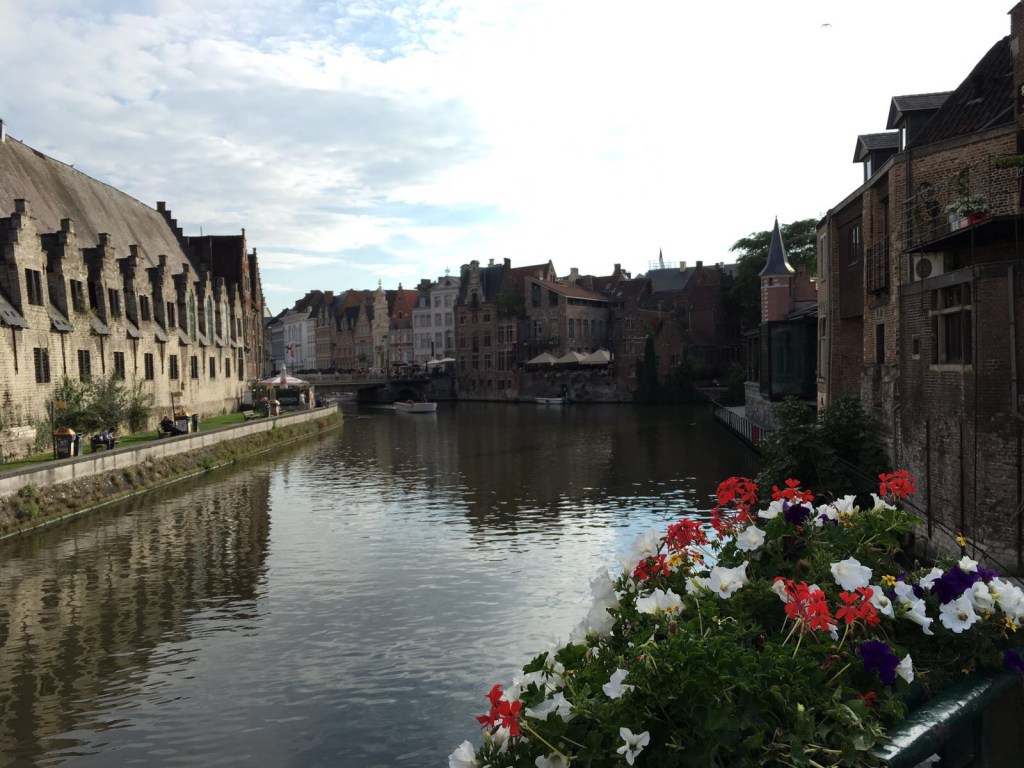
Once in Belgium, and although borders have been open for decades, the scenery still changes in subtle, but sudden ways. Colors of trees and houses become completely different so does the shape of inner city roads. It all looks less identical and orderly compared to The Netherlands. Arriving to Ghent feels like walking into the 13th century, when most of its buildings were constructed, and then back into the 21st century with all its modern restaurants, cafés, museums, markets and shopping districts. Locals are very friendly and welcoming. Prices are affordable, food is exquisite; I had the best steak ever, and there is lots and lots of beer: hundreds of flavors and suggestions to match your meal perfectly (So you get beer instead of wine suggestions with your meal – wonderful).

I ended up visiting the same places over and over. Cour St Georges or Sint-Jorishof was one of my favorites. A steakhouse throwback to the middle ages. Wooden floors were covered in quilt, skins of some hunted animals were hanging on the walls and liter sized clay pots of beer stood on the shelves of the bar. A room on a higher floor is dedicated to smokers – one would imagine a group of rowdy horsemen smoking pipes and drinking pints of ale. You can either order a normal portion size from the menu or pick your piece of meat from a large display in the vitrine. We ended up sharing a 350 grams of beef steak with two liters of beer and a large bowl of fries.

Another nice spot for dinner or lunch is restaurant de Graslei. It offers a great view over the colorful old buildings of Ghent on both sides of the canal. We tried the “moules et frites” seasoned with fresh garlic, obviously. It was delicious. Although I don’t recommend eating chunks of garlic for dinner. I ended up smelling like garlic for two days (and, I’ve been told, burping out fumes throughout the night). Not very classy.

Before leaving Ghent, we had to visit Gentse Gruut or the city’s brewery. There, you can actually have beer tasting, get a walking or boat tour to know more about its history. After your visit, the short tasting session you had helps you learn about various beers and their characteristics. Then you can create your own beer as a beer alchemist. As we showed up about 30 minutes before closing time and thus missed the 3-hour beer walk, we only made it to the degustation part where you’re offered five different kinds of beer in small glasses. I returned home quite satisfied (and appie!).

There are many small bars in the city but Café t’ Galgenhuis is the smallest, oldest and most “gezellig” in Ghent. Behind its small roof, public humiliation or shameful exposure of prisoners and offenders took place. Apparently, this was immensely fashionable in the Middle Ages. Used usually to punish less serious crimes, the show offered viewers the opportunity to shout or throw things at those accused. Both physical and verbal abuse could be inflicted. Prisoners were held in a pillory, a device made of a wooden or metal framework with holes for securing the head and hands. Now you can just sit outside on the terrace and enjoy a cold glass of beer in the sun. This was our late afternoon ritual in the couple of days we spent in the city. Throwing it at people is no longer allowed.

We found several impressive churches in Ghent, but just like many European cities, most holy places are now serving other purposes: theatre, festivals, exhibitions and food markets. The Holy Food Market in Ghent used to be a chapel that goes back to the 16th century but was transformed into an indoor food court with various food stands including Lebanese mezze. Make no mistake dear believers, almost everything in there takes into consideration religion, but now as foodies’ religion. You’ll find a holy gin bar, holy Malaysian cuisine, a Magnum pleasure store, a Karnivoor stand for meat lovers and Yalla Yalla Beirut street food among others. Once you finish, a sign at the door asks you to please the lord and clear your table.

It’s almost midnight and you don’t want to go home, because you’re on holiday. Mosquito Coast is where we ended up almost every night. An unconventional alternative cafe with old stickers and posters on the walls. Various photographs and souvenirs from different parts of the world are displayed in the corners of the restaurant. Many go back to Congo, a former Belgian colony. Here you can find Belgian beer of course, and all the delicious cocktails you can drink to cool down and get to sleep in the hot summer nights – which do not occur often enough in Northern Europe.