Big in Japan – Part III

Have you ever watched sumo wrestling? 

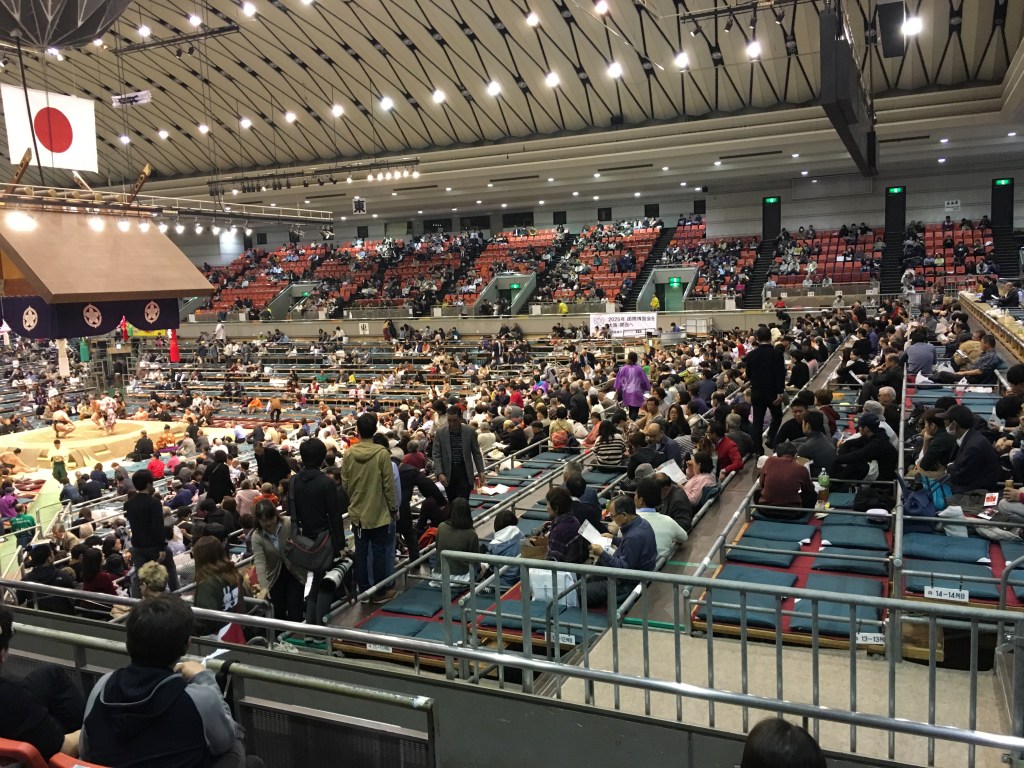
When I heard of the grand sumo tournament happening in Osaka I thought I needed to get tickets. They were sold out online so the only way was for me to get up early in the morning (five a.m.) and queue hoping for a ticket. And it worked!

The crowd started small at nine in the morning to watch junior fighters compete. In the afternoon more skilled and high-ranked wrestlers faced each other, which made fights more exciting. Those who had more wins than losses in the game moved up the hierarchy while those who lost got demoted. The winner was handed a closed envelop (probably cash) at the end of every match. I tried to get more information about the rules of the game from Japanese spectators. One big sumo fan university student explained that the game was all about “pushing” and “pulling”. In both cases, a player aims to destabilize another by either making him fall and touch the ground or kicking him out of the ring. 

Sumo wrestlers had to put on weight and were asked in stables, which are accommodations where they lived and trained, to eat certain types of food and drinks including a high-in-calories stew. It is not until many of them suffered from diabetes and others died at the age of 65 (which makes sumo an unhealthy sport – ironically) that rules became a little more lenient. The concluding match took part that day late in the evening. After a long introduction of who the players were, their ranks and them posing with the mawashis they were wearing (check the photos below), it took only a couple of seconds before one of the wrestlers got thrown out of the ring. That was the end – I literally spent about 12 hours watching sumo wrestling waiting for the final match which ended in like 10 seconds.

While you’re in Osaka, Osaka castle is totally worth a visit. It is one of the biggest in size in Japan. Major battles between different clans including shoguns (rulers appointed by the emperor) were fought there. The castle has been destroyed several times to be rebuilt again, kind of symbolizing the rise and fall of the country’s history. The outer moat and tower give you an idea on how this building must have been besieged back in the 1600s.

Because no distance is too far in Japan, I made two trips from Osaka: to Kobe, which reminded me so much of the coastal city of Jounieh in Lebanon with its green mountains looking down onto the sea. I walked around its small hills where you can still see western designed houses. These go back to the 19th century when the city opened up to foreign trade – and Japan was forced to come out of its isolation. Most European style houses were inhabited by foreign merchants and diplomats. Starbucks managed to use one (damn it!)

When I walked into a local standing bar, waitresses and clients started cheering – a tradition that always makes you feel welcome and want to drink more. I had a couple of beers with two Japanese salarymen. Luckily one of them spoke English so I started bombarding him with questions about the country. He was very much pro-peace and said “although Japanese people have concerns about North Korea and China, most of them don’t want to go through war again”. This was in response to my question about article 9 – which is “a clause in the constitution outlawing war as a means to settle international disputes involving the State”. However, he was not happy with Japan “being dependent on other countries for its security or having several US military bases”. He recommended that I visit Hiroshima – which I was going to of course – and that I try the Kobe beef steak while I’m here. I did; medium rare with nothing more than pepper and salt. It just melts in your mouth with its soft, succulent flavor. The next day I took the early Shinkansen to Hiroshima, 330 Km away from Osaka (and back in one day!). 

Big in Japan – Part I

Going to Japan was a “not anytime soon” type plan for me. It is a bit out of the way (12 to 14 hour flight from Amsterdam), it needs time and money. But it happened that I had all that this year and I thought: it must be a sign. Yeah, I’m one of those. Besides, I got my visa so easily – I still need to apply for visas, it’s not over yet – which meant I had to go.

Despite a horrible jet lag after a very long trip, I hit the streets of Tokyo: a city that knows no limits. You’ll probably need two lifetimes to see its main (big!) areas and visit all the restaurants, pubs, karaoke bars, museums, shrines/temples and manga comic stores. That’s when the Lonely Planet comes in handy because it helps you to be more selective and not lose your mind. There is just so much to see and do. 

Tokyo is overwhelming. Its glass shiny buildings are modern and huge. Its streets are incredibly clean although you barely see trash bins anywhere. I have never carried so much trash in my bag as I did during this trip. Everything was so clean. At a public fish/meat market, we did not see one single fly, literally – it makes you want to keep it that way. 

Indoor smoking was surprisingly allowed in Tokyo while it was illegal in undesignated public areas. The use of plastic bags was quite common every time you bought anything no matter how small in a shop or a supermarket. And the drinking. I thought Asians had more trouble tolerating their alcohol but it did not seem to be the case there. In all izakayas – small bars that can accommodate anywhere from 8 to 100 people who end up mingling together throughout the evening – salarymen and women still in work wear were drinking and chatting. Whenever I was heading out around 10 in the evening, I would see them heading back home, most of them looking exhausted or falling asleep in the subway. People seemed never to stop working: you don’t leave the office before your boss, and he does not leave either before his boss and it goes on and on. Some companies I learned have taken measures to block employees access to their emails starting a certain hour.

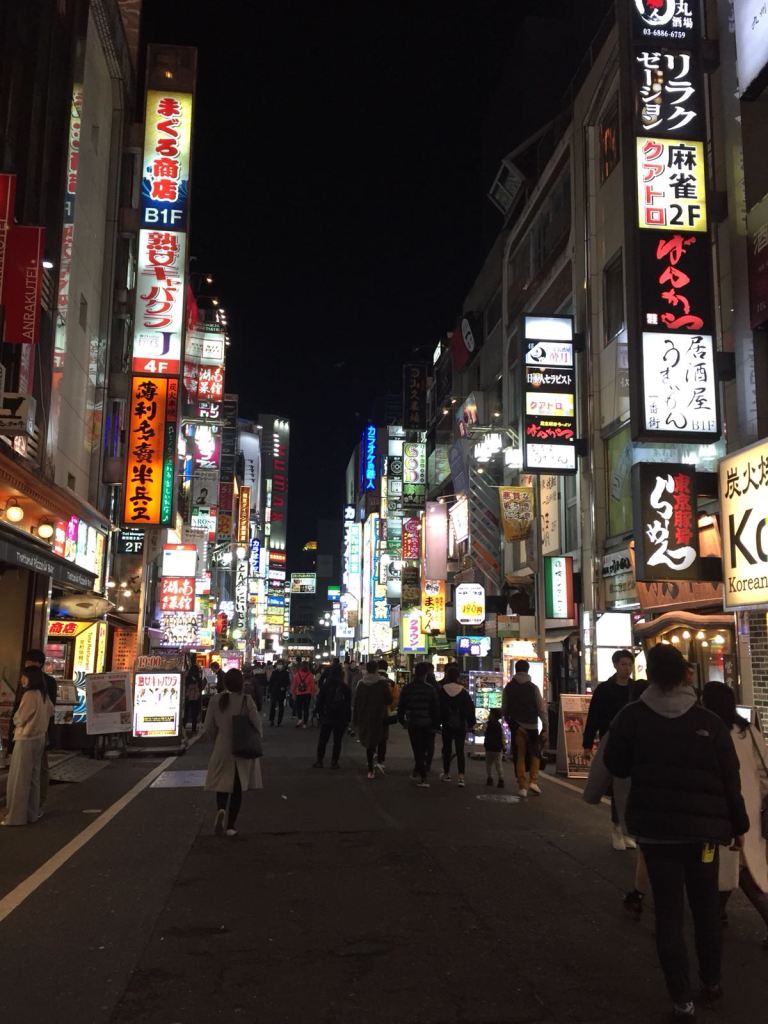
The city is so big that I felt very small, completely anonymous. It is very unlikely that you’ll ever run into a cousin or an ex there. Half of Tokyo exists in the form of subway and train stations. I got lost in stations due to the language barrier – not many people I met could speak English – but also because there were at least four or five exits to every station. The city has the most “polite and well behaved” red light district I’ve seen (okay, I’ve only see one, in Amsterdam). I wouldn’t have recognized it if it wasn’t for the “Sleep, rest or stay” sign at the entrance of so called love hotels and the many maid cafés. Apparently some bars hire women to cater to men or vice versa. I did not get the chance to know what actually happens in there. Maybe next time. Bright lights, music and ads are all over the place. Among the areas I visited were: 

Shinjuku: Several buildings are dedicated only to Karaoke – it’s quite a serious business there. It wasn’t long before I rented a cubicle, probably 2×2 square meters, for half an hour. You can shout all you want and drink all the beer you can, it’s almost therapeutic. Before 11:00 P.M. I took a walk towards the Tokyo metropolitan Government Building. Once you are at one of their highest floors, you’ll be able to have a free night view of the city and its towers – or you can also try Tokyo SkyTree and pay a little (a lot) more.

Shibuya: It is known for its famous crossing, where every couple of minutes several hundreds of people cross in all directions. It looks like the start of a protest, but it’s really just Japanese following the rules like a well-organized stampede of harmony. Tokyo subways run until 12:30 after midnight and it happened that I missed mine in that part of town. Taxis are very expensive so I used that as an excuse to spend the night roaming around between bars and clubs until the early morning. Speaking of taxis, the door behind opens like magic. You don’t even need to touch it. Harajuku, which is a street in Shibuya, is a must see for those who like funky, pinky and kawaii (meaning cute) styles. It is known for its fashion scene, cafés and bars which attract mostly teenagers and youths. There’s so much pink everywhere that you feel you’re in a  piece of bubble gum. 

Akihabara: I thought I had stepped into a futuristic cartoon movie or comic book. Posters with different Manga characters – comics created in Japan in the late 19th century – are everywhere. They include “normal” funny comics and at times even adult or teen porn comics. Female cartoon illustrations take different shapes and forms but mostly, show manga girls in “sexy” school uniforms. It’s THE fantasy. Entire buildings are dedicated to virtual reality games, video games, electronic stores, animation, you name it. A total nerd haven but incredibly fun.

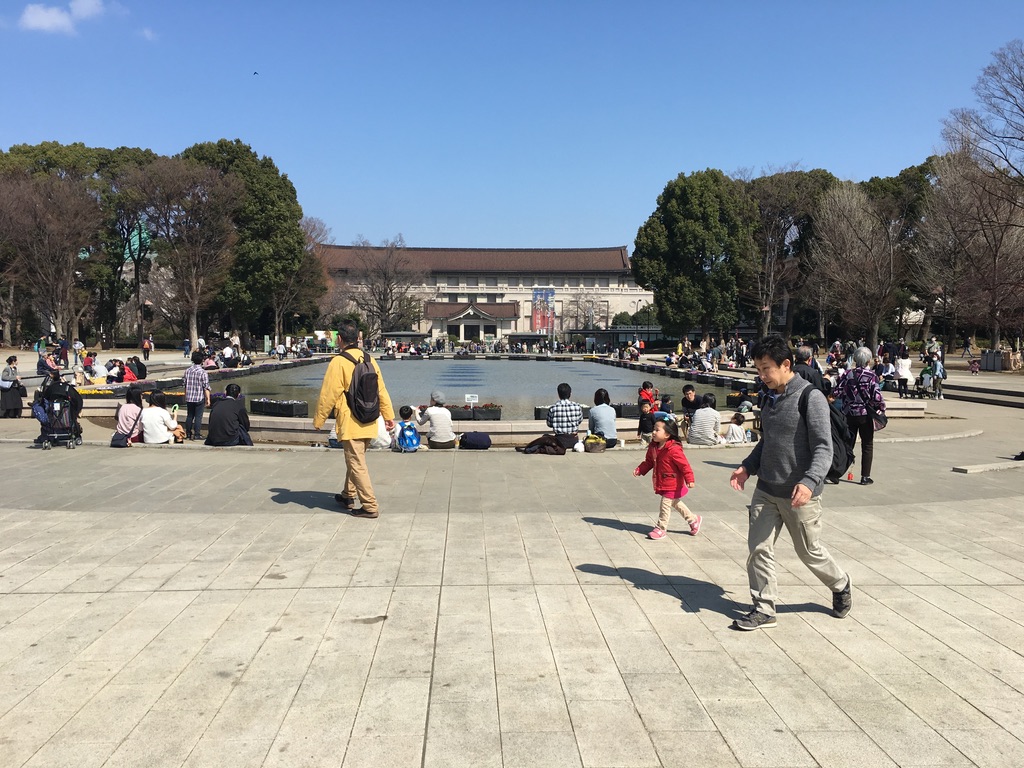
Ueno: This is where the Tokyo national museum is located (and a must see) in addition to several shrines and temples and a beautiful park. 

Ginza: Here you are close to the imperial palace and can take long walks along shopping avenues while making stops in elegant bars and cafés. I seized the opportunity to book a single Kabuki act, which is a classical Japanese dance drama. It was called “Kanda Matsuri”. The story was available in English on a small screen. Only men are allowed to play the role of Geishas. The music, white facial make-up and clothes were very exotic, to me at least. Photos are not allowed.  

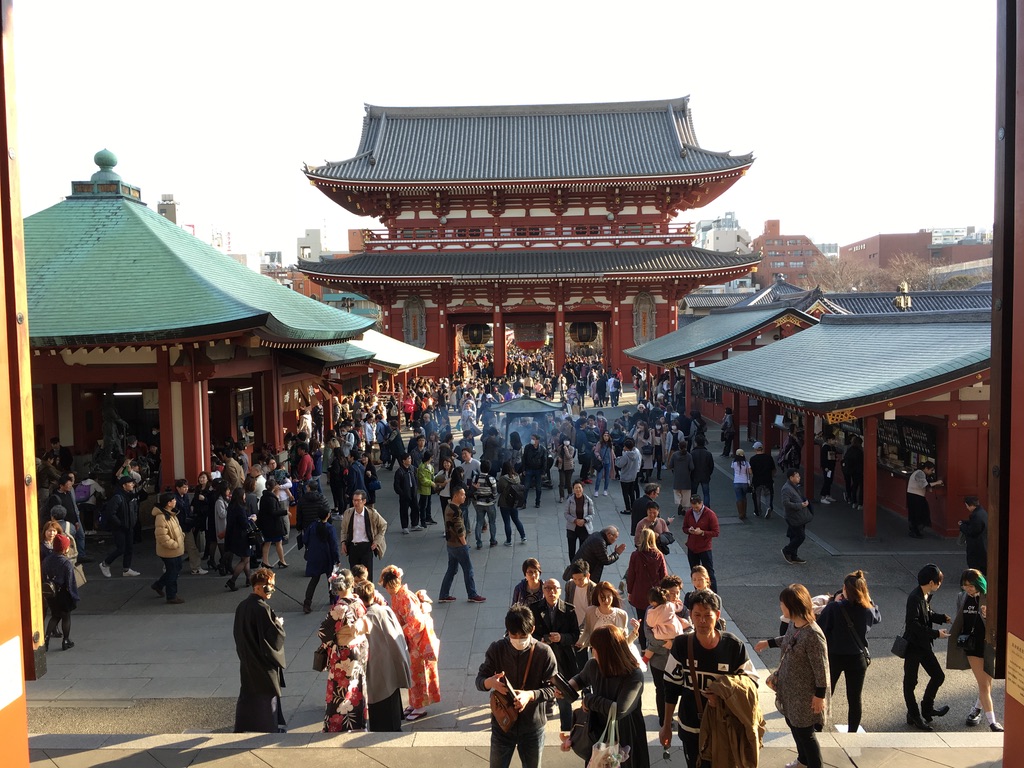
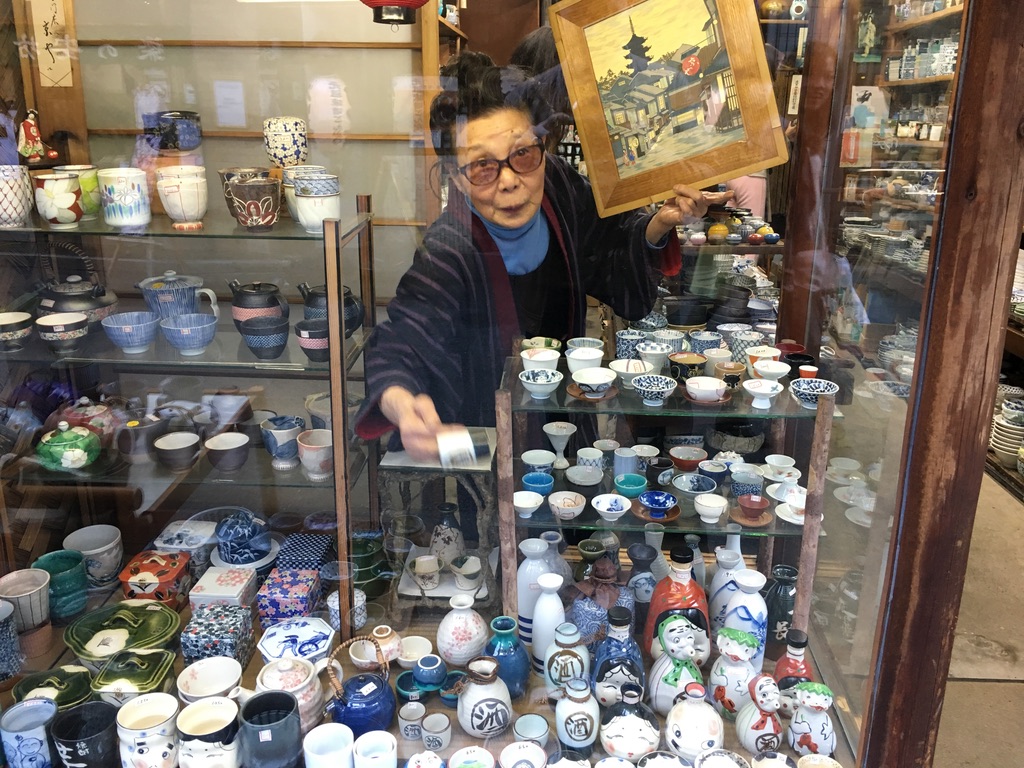
Asakusa, where the oldest temple of Tokyo is built: Senso-ji. I went there before sunset to enjoy the bright orange colors of the various buildings and visit craft, souvenir shops and eateries – got a cool sake set for home. 

I really enjoyed my time everywhere I went. There was always something new to see, to eat (I put on two kilos in one month) and to discover. Even when you thought you’ve seen one street, more small bars and restaurants would appear in hidden alleys. It was just endless.

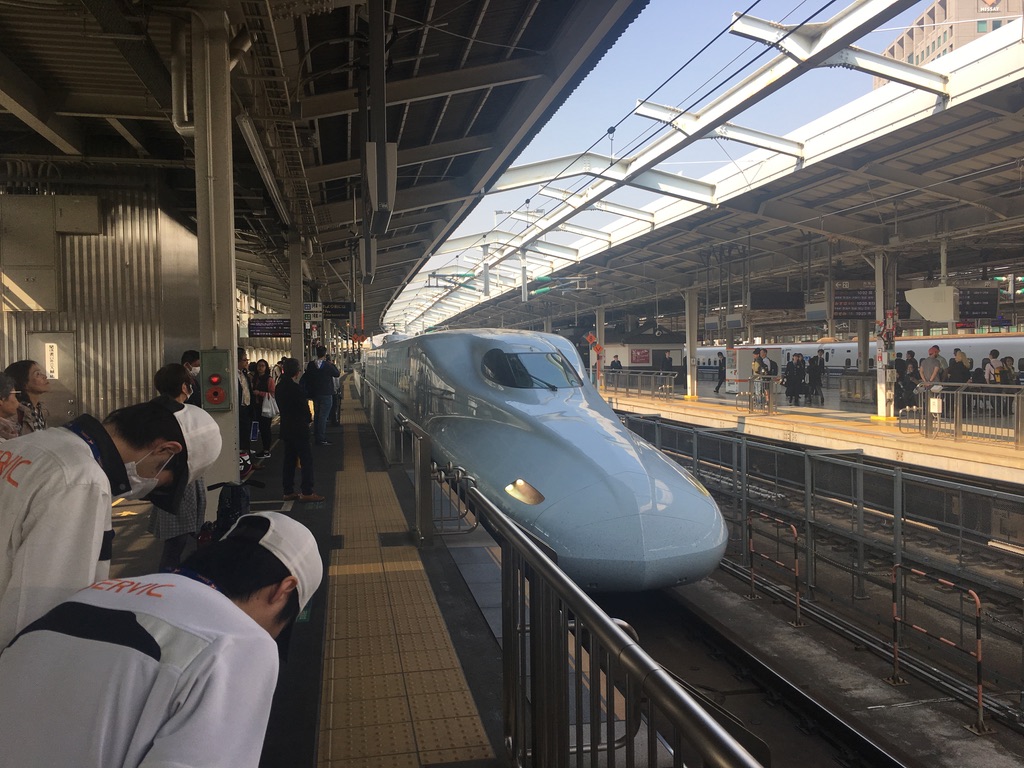
After seven days in Tokyo – which is not enough, I hopped on the Shinkansen or high speed train to Kyoto. And this thing goes like a bullet. It is very comfortable, clean and timely – not a second late (you can do better Holland!). In just a couple of hours, I was in Kyoto – after a very smooth trip and a glimpse on the way at Mount Fuji above the clouds.

Ghent

Imagine you’ve finished work on a Tuesday afternoon, and three hours later you suddenly find yourself in a different country. All you need to do is hop on a train from Amsterdam to the medieval Belgian city of Ghent – or ‘Hent’, as pronounced in Flemish which is a very cute version of Dutch. No borders, no customs and no need for a visa – something that I, as a Lebanese, can’t help but appreciate every time (Lebanon borders two countries: one is impossible to enter “Israel”, the other is too dangerous “Syria”. We also need a visa to almost every other country in the world).

Although I had booked a couple of weeks earlier, the day before traveling was a little stressful. I got annoyed for the first time with NS, the national public transportation sector here – for once joining the big chorus of Dutch complaining about their national rail road (although I still think that it’s pretty good, normally). Their website mentioned delays due to works on railways. It did not give alternative times or routes to take, particularly for those making international travels. Eventually, it all went well and we made it in a very short time.

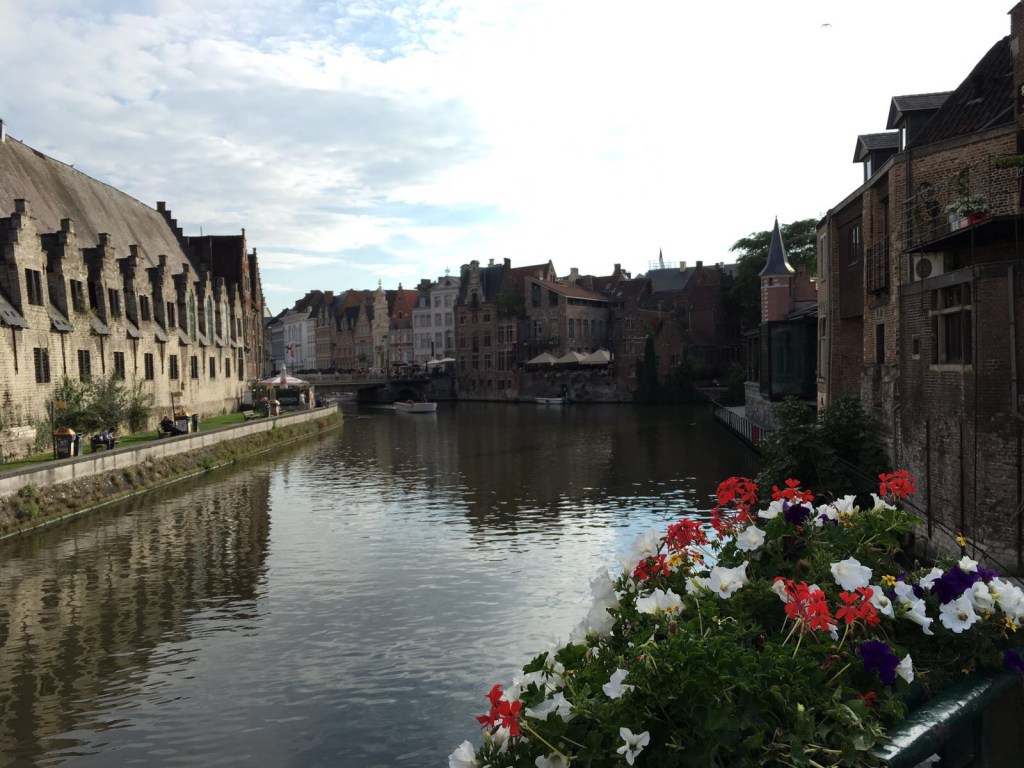
Once in Belgium, and although borders have been open for decades, the scenery still changes in subtle, but sudden ways. Colors of trees and houses become completely different so does the shape of inner city roads. It all looks less identical and orderly compared to The Netherlands. Arriving to Ghent feels like walking into the 13th century, when most of its buildings were constructed, and then back into the 21st century with all its modern restaurants, cafés, museums, markets and shopping districts. Locals are very friendly and welcoming. Prices are affordable, food is exquisite; I had the best steak ever, and there is lots and lots of beer: hundreds of flavors and suggestions to match your meal perfectly (So you get beer instead of wine suggestions with your meal – wonderful).

I ended up visiting the same places over and over. Cour St Georges or Sint-Jorishof was one of my favorites. A steakhouse throwback to the middle ages. Wooden floors were covered in quilt, skins of some hunted animals were hanging on the walls and liter sized clay pots of beer stood on the shelves of the bar. A room on a higher floor is dedicated to smokers – one would imagine a group of rowdy horsemen smoking pipes and drinking pints of ale. You can either order a normal portion size from the menu or pick your piece of meat from a large display in the vitrine. We ended up sharing a 350 grams of beef steak with two liters of beer and a large bowl of fries.

Another nice spot for dinner or lunch is restaurant de Graslei. It offers a great view over the colorful old buildings of Ghent on both sides of the canal. We tried the “moules et frites” seasoned with fresh garlic, obviously. It was delicious. Although I don’t recommend eating chunks of garlic for dinner. I ended up smelling like garlic for two days (and, I’ve been told, burping out fumes throughout the night). Not very classy.

Before leaving Ghent, we had to visit Gentse Gruut or the city’s brewery. There, you can actually have beer tasting, get a walking or boat tour to know more about its history. After your visit, the short tasting session you had helps you learn about various beers and their characteristics. Then you can create your own beer as a beer alchemist. As we showed up about 30 minutes before closing time and thus missed the 3-hour beer walk, we only made it to the degustation part where you’re offered five different kinds of beer in small glasses. I returned home quite satisfied (and appie!).

There are many small bars in the city but Café t’ Galgenhuis is the smallest, oldest and most “gezellig” in Ghent. Behind its small roof, public humiliation or shameful exposure of prisoners and offenders took place. Apparently, this was immensely fashionable in the Middle Ages. Used usually to punish less serious crimes, the show offered viewers the opportunity to shout or throw things at those accused. Both physical and verbal abuse could be inflicted. Prisoners were held in a pillory, a device made of a wooden or metal framework with holes for securing the head and hands. Now you can just sit outside on the terrace and enjoy a cold glass of beer in the sun. This was our late afternoon ritual in the couple of days we spent in the city. Throwing it at people is no longer allowed.

We found several impressive churches in Ghent, but just like many European cities, most holy places are now serving other purposes: theatre, festivals, exhibitions and food markets. The Holy Food Market in Ghent used to be a chapel that goes back to the 16th century but was transformed into an indoor food court with various food stands including Lebanese mezze. Make no mistake dear believers, almost everything in there takes into consideration religion, but now as foodies’ religion. You’ll find a holy gin bar, holy Malaysian cuisine, a Magnum pleasure store, a Karnivoor stand for meat lovers and Yalla Yalla Beirut street food among others. Once you finish, a sign at the door asks you to please the lord and clear your table.

It’s almost midnight and you don’t want to go home, because you’re on holiday. Mosquito Coast is where we ended up almost every night. An unconventional alternative cafe with old stickers and posters on the walls. Various photographs and souvenirs from different parts of the world are displayed in the corners of the restaurant. Many go back to Congo, a former Belgian colony. Here you can find Belgian beer of course, and all the delicious cocktails you can drink to cool down and get to sleep in the hot summer nights – which do not occur often enough in Northern Europe.

Petiscos and Ginja*

Good wine, good food and good company are some of life’s most civilised pleasures, someone said. Add to that warm weather and Fado music and you’ll find yourself in Lisbon, one of the most underrated cities in Europe. If you appreciate the simple joie de vivre like me, you must visit this beautiful Portuguese city.

Time moves slowly and days feel longer, in a good way. People enjoy the warm, crisp evenings until well into the night, at least they did during my September visit, but still manage to go to work in the morning. During my short holiday, I made sure not to get up so early. My day started around ten with a short hop to the nearby bakery for coffee and delicious pastries, particularly pastéis de nata, my favourite. Then I was back to my small cozy apartment on the foot of one of Lisbon’s many hills to enjoy my sweet breakfast. Using Airbnb allowed me a glimpse of how locals live. After spending a week, people in my street started greeting me as if I’d  always been living in the neighbourhood.

Around noon, it is time to go out. Take one of the small and colourful trams that regularly go up and down the hills overlooking the water. Head to a viewpoint, or a miradouro, as the Portuguese call it. Each offers wonderful views: monumental architecture and buildings often decorated with blue, white or green ceramic tiles brought by the Moors in the Middle Ages; panoramic scenery; the city’s port; and the 25 de Abril Bridge, a smaller version of the Golden Gate Bridge in San Fransisco. Grab a drink and have a long break.

Getting hungry yet? I am. Alfama, the oldest district of Lisbon, has many places that serve traditional Portuguese gastronomy as well as international cuisine. I felt right at home, with the Portuguese custom of eating various small plates of food. Petiscos, similar to the Spanish Tapas and my own beloved Lebanese Mezze. And of course: Vinho Verde, the unique made-in-Portugal-only green wine; young, cool, summery, light and low in alcohol.

While walking around the streets of cobblestone in Lisbon, I made regular stops on the long stairs to look at the buildings. In some areas the difference between various constructions was staggering; completely renovated apartments with shiny ceramic tiles on their facades, standing next to almost crumbling houses with broken shutters and no windows. When I asked for the reason, I was told that many often elderly tenants pay extremely low rents, frozen by an old law decades ago. So the owners can’t afford upkeep, buildings are in shambles. It reminded me of Beirut: some policy set in motion at some point because it served some populist politician, or even seemed wise at the time, but nobody bothered to look at the long-term consequences.

The last economic crisis hit the country hard. Although it is recovering very slowly, many elderly have to live off pensions 250 or 300 euros a month, which allows for very little. Youth unemployment remains high, many people beg on the streets, people complain about corruption in various official departments. That’s how locals explained their current situation, a big contrast with the more prosperous Northern Europe. But I am no expert on Portugal, merely an observer and obviously a curious listener to whatever the locals have to tell about their country.

I still loved the vibe in Lisbon. It feels way more leftist and hippie than in Amsterdam: more graffiti, young people never seem to be in a rush, the streets are full with endless kiosks, small casual restaurants and bars – rather than luxurious or sophisticated diners –  prices are affordable. The coast is lined with a sandy beach, the water looks super clean. It is the perfect location to watch the sunset. Grab a glass of cold Sangria and sit on a bench to enjoy the amazing tones of orange, pink and yellow.

All in all, an ideal destination for a long and relaxing stay.

*Ginja is a sweet cherry liqueur that originated in Lisbon. You can drink it in a small chocolate shot and the trick is not to eat the shot in order to have a refill. It’s terribly good.

A Short Getaway

One of the advantages of freedom of movement and open borders is the possibility to book last minute trips and travel around Europe. Or the world, even – but only if you are lucky enough to have a Western passport and thus can get visas on arrival to practically anywhere. As someone who comes from Lebanon, a small country bordered by war-torn Syria on one side and a not so friendly neighbour Israel on the other, I love my newfound luxury to travel freely to various European cities.

The Lebanese passport does not make things simpler. Its current global power rank is at 85, same as North Korea according to the passport index list for 2016. This gives you a pretty good idea on the bureaucratic “torture” Lebanese citizens have to endure to be allowed into almost any other country- unless of course, they hold a second passport from the US or EU, which many do. Being Lebanese means having to apply for a visa (long) in advance, through foreign embassies in Beirut, for almost every destination EU citizens can just hop on a plane to. Only 39 countries, which you can find here, give us a visa on arrival.

Some Lebanese blame it on the Lebanese Minister of Foreign Affairs and Emigrants who, they say, is not doing his job including, but not limited to promoting and maintaining positive diplomatic relations with other countries. Others say it’s because of Hezbollah who, let’s face it, dominates many of the Lebanese government’s decisions and is not appreciated by a considerable number of countries worldwide. But I won’t linger on this. What matters here is that I used my access to those open EU-borders to have a short hop of my own, to pretty Milan and Bologna!

Italy was the first European country I ever visited. I was fourteen when our high-school director organised a two-week trip to Rome, Florence and Venice.  More than fifteen years later I went back to visit other Italian cities. All I had to do this time, was show my Dutch residency and get on the plane. It was probably the smoothest trip I’ve ever had. Although an hour and a half away only, temperatures were considerably higher, making me feel right at home; it was an actual real summer. During the six-day trip, all we did was walk around, visit museums and of course churches, attend musicals, eat and drink. In order to avoid putting on two or three kilos, I highly recommend you do a lot of walking; enjoying the Italian cheese and charcuterie delicacies at the many ristorante, trattoria and osteria comes at a high price.

Between Milan and Bologna, I fell for the latter: the small streets, the pinkish and yellow buildings, people’s generosity and sense of humour. Bologna is a very charming place, away from drunk and loud tourists. Calmer locals, calmer tourists, calmer everything. But most of all, the Italian language. It is simply so beautiful to listen to that you end up speaking English with an Italian accent. I’ll definitely go back to Italy again soon.