Don’t spread the bullshit

Since the pandemic started I have seen family members and friends on and off social media latching onto conspiracy theories in a never-ending cycle. What I found funny at first, like believing there is a magnetic chip in the anti-covid vaccine because your government is trying to control you or that this whole thing is a plot from Bill Gates, is no longer laughable.

Conspiracies and fake news. Even in war. Because there are two sides to the story: a Russian one and a Ukrainian one. Russia is clearly saving Ukraine from nazis and Ukraine is attacking and killing Russian ethnic groups – which means that this invasion is not an invasion but a heroic attempt from Russia to save its neighbour. Yeah right.

When did facts no longer matter? Did Russia invade Ukraine? Yes. Was this legitimate? No. Are there nazis in Ukraine? I’m sure there are nazi sympathisers everywhere including in Ukraine. Does this make them all nazis? No. But what about the US, they say, they’re not any better. Please spare me the “whataboutism”. Because if we go down that road, it’s pointless to even have a discussion. The USA f****d up in Iraq, in Afghanistan, in Vietnam, in Libya. Basically in every country they interfered. Was the US right to support dictatorships in Iran and Latin America? Hell no. If I condemn Russia for invading Ukraine, am I siding with the American foreign policy? Hell no. Are most Russian media spreading the regime’s propaganda and misinforming the local population? Yes they are. So you’re saying that the western media has always been non-biased? No, not at all. I never said that. Does the West have more independent media that will go at length to share facts with their readers & viewers? Yes. I come from the least democratic region in the world, where media is politicised, not reliable and totally controlled. Those few journalists who try to write it as it is end up dead or fired or just leave the country. So you can understand why I appreciate reliable media.

But (there’s always another but) look at how Europe is embracing Ukrainians fleeing their country. Why were Syrians, Africans, Afghans and other non-white refugees treated differently? I am not a policymaker so I will not answer this question but I surely don’t like Europe’s double standards. I find it sad and disgusting. So the west is not perfect, I told you. No it’s far from perfect. But there’s a reason you came here because this is where you can have a better life, or was it maybe that you didn’t have a choice?! You’re at least in a part of the world where you won’t be sent to jail for 15 years for saying I don’t like my president. Or I’m gay. Democracy is real. It is not perfect, but it is the best system we’ve had so far. It is where you get to choose which newspaper to read, which TV to watch and you make your own conclusions. Journalists are not meant to tell you what to think. They don’t make policies. You do, when you choose who to vote for. Journalists are messengers who go to Ukraine and Russia and other countries to see what is happening up close. As a friend (hi Roel!) puts it nicely: if you don’t like the way they report on Ukraine, why don’t you move your ass and go there to check for yourself with your big mouth?

For those of us lucky to be living in a civilised country, who come from countries where human life has no value, we should not forget why we left. Don’t resent the country you’re living in but the country you came from. It basically kicked you out. You were never welcome there.

For those of us living in Europe, yes, Europe is not perfect. There is racism, fascism, discrimination, inequality, poverty. But take a moment and look where Europe came from. A couple of generations ago, France and Germany were at war. Look at the rest of the world, the Middle East, Africa, Asia, Latin America. Autocrats, militias, corruption (lots of it), dysfunctional societies, oppression, women’s rights? Non existent. You might say colonialism contributed to that. You might say the west is purposefully keeping the rest of the world on its knees. You might say the west has lost its moral compass and values. We at least have family values (which is bullshit by the way). I won’t keep going because there is no point. I do agree we have to understand the past to build the present and the future.

Seeing these posts on Twitter and Facebook trying to analyse how we got to the war in Ukraine will not help solve the current situation. This is, as we say in NGO jargon, a lesson learned. And for those who do have access to decent media because they live in free countries, what’s your excuse not to read The New York Times, Le Monde, La Libération, De Volkskrant, Der Spiegel and others? Because you have a responsibility to stick to facts. You are more to be blamed for spreading misinformation. You have the opportunity, the means and the access to the truth and yet you make a conscious decision to promote conspiracies. That’s either stupid, sick or both. In all cases, there’s something wrong with you. And please don’t start arguing why you are not vaccinated. Oh wait, this is probably a different group. Oh man, the end must be near.

Stemmen op 17 maart 2021 – gedaan!

Vandaag heb ik voor de eerste keer in mijn leven gestemd. Niet in Libanon, waar ik vandaan kom, maar in Nederland. Vier jaar geleden, toen ik net naar Amsterdam was verhuisd, kon ik niet stemmen. Ik twijfelde tussen GroenLinks en D66. Dit jaar heb ik naar bijna alle debatten tussen de verschillende partijen en hun programma’s gekeken. Ik twijfelde nog: ga ik voor PvdA, die hun stemmers in de vorige jaren teleurgesteld hebben? Of voor GroenLinks? Die zijn te “politiek correct” en dat lijkt me soms onrealistisch. Of D66, die om eerlijk te zijn oorspronkelijk mijn voorkeurspartij waren? 

Nee, niet met Sigrid Kaag als lijsttrekker. Toen ze in Libanon werkte als UN Special Coordinator for Lebanon, heeft haar bureau een e-mail gestuurd naar alle VN werknemers (inclusief mijzelf) om ons te verbieden om een deel te nemen aan de betogingen tegen de corruptie van de Libanese regering in 2015, en hun slechte aanpak van de afvalcrisis. Dit vond ik ondemocratisch en een beetje hypocritisch van haar. Als Libanees had ik het recht om te demonstreren. Dit zou niet in Nederland gebeuren bijvoorbeeld. Ik had ook hetzelfde gevoel toen ik naar één van Kaags interviews luisterde: ze zei dat het ze geen nee kon zeggen tegen een ‘eerste’ baan bij Shell, ondanks dat dit bedrijf activiteiten had in Zuid-Afrika tijdens de apartheid. Dus voor mij was ze niet iemand die echt staat voor principes. Het ging over de omstandigheden; dit is de houding van diplomaten. Een partij leider is geen diplomaat maar een politicus.

Voor wie heb ik dan gestemd? Volt. Een nieuwe partij die net is begonnen in de politieke sfeer en die Europa steunt. Daarin geloof ik, vooral om dat ik uit een erg verdeeld deel van de wereld kom. Een sterke EU is belangrijk voor de groei van Nederland. Ik wil ook een kans geven aan een groep mensen met nieuwe ideeën, net als ik een kans kreeg toen ik naar Nederland kwam. 

Beirut is broken

One month after the devastating explosion in Beirut, the terrible news keeps coming: people still trapped under the rubble (one thought to be alive!), others missing, more than 150 dead and 6000 injured, hundreds of lost pets and countless restaurants, cafés, shops and other local businesses completely destroyed. 

Since I left Lebanon four years ago, I never felt as sad and angry as I did in the past month. It’s been a roller coaster of emotions. I clung to Facebook, Twitter, Lebanese TV channels (which I never used to watch even when I was in Lebanon) and international newspapers in an attempt to understand how this disaster happened and, more so, not to miss a single story, since four August. Fear for my friends and family (none of whom are ‘okay’, but at least they’re safe and alive) and sadness about the fate of my people turned into anger at this disgusting, incompetent and rotten political class as well as at those who are loyal to them; then into frustration and helplessness for not being physically present in Beirut.

Besides the tragic and heartbreaking stories I saw — about mothers and fathers losing children, spouses and siblings being buried, classmates, friends, colleagues, passers-by or people at home maimed while going about their day, business owners losing their entire life’s investments, houses that are no longer habitable (more than 300,000 people left homeless), cars completely destroyed — it was and is painful to see friends and acquaintances who have dedicated their lives to making their passion a reality, be it through museum exhibitions or theatre or art or music or festivals or poetry or anything else that gives meaning to life, lose it all. They offered it to everyone else in the society to celebrate and enjoy, and now it is gone. 

A few days after the explosion came the feeling of guilt. For living in a functioning country, for having good roads, electricity, water, health care, education, freedom and accountability. It is almost perfect. There is barely anything to complain about. I felt privileged. Why me? After that, anger surfaced again, this time at those around me moving on with their lives like nothing happened. I felt like yelling: Beirut is destroyed! Don’t you see? Nothing meant anything anymore. On a Saturday morning, I had a long run for Beirut, wearing a T-shirt from the 2015 Beirut marathon. I wanted people in the Vondelpark to see the word Beirut, to think about it.

I spread the word about which organizations to donate to, individual Lebanese who needed help rebuilding their shops and restaurants. I talked a lot with my family in Lebanon, trying to understand the present and the future. Where did the ammonium nitrate come from? How long has it been there (since 2013)? Who stores fireworks next to such an explosive material? Are we sure it was not an Israeli missile? Was Hezbollah storing weapons there? Will any politician or senior government official be held accountable? If so, when? What’s the scale of the destruction (more than you can imagine)? How does my street look like (you won’t recognize it)? Is the apartment I lived in damaged? Do you know if the two old ladies running the small shop in Mar Mikhail street were hurt (they’re alive)? How is the situation with corona after this catastrophe (hospitals are overwhelmed)? Are NGOs getting the aid money or the government (bunch of thieves)? What can I do to help from The Netherlands? Do you think I should come?

There was no more talk about hope and resilience, about Beirut the city that is full of life despite everything, yadda yadda yadda. Only misery across the country. Will this bring any change? I doubt it. But I can’t see how it can get any worse. So it must get better.

I retweeted this image a while ago – (if you know who the designer is, please
mention him / her in the comments).

A year in pictures

Looking back on the past twelve months: family time, travel, celebrations, love and nature

Meeting my sister at Amsterdam airport Schiphol. The feeling you get when seeing a loved one after a long time (a year or so) is an overwhelming happiness.
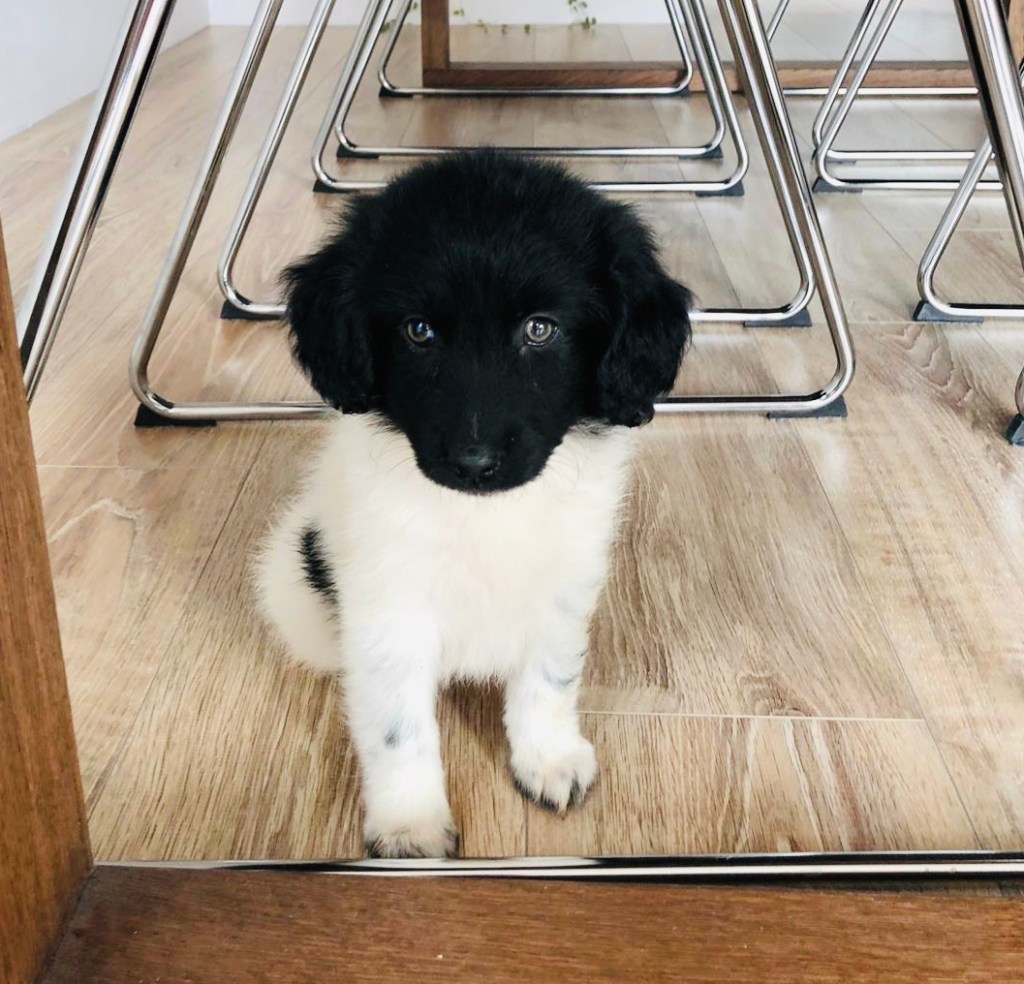
The new addition to the family: Wolf (a She wolf). Needless to stay, she is the cutest thing ever! A Stabyhoun, originally from Friesland in the north of The Netherlands, this furry friend follows me everywhere I go and watches every move I make. Wolfie (her nickname) is sweet, smart and a little stubborn on occasion.
King’s Day in Amsterdam in April. Everyone is celebrating the birth of the king. Some parade on boats in the canals with music, beer and orange accessories or clothes (Orange is the national color here – the color of the Dutch royal family – unlike in Lebanon, where it represents a certain party, which I don’t particularly favor – not that I favor any other).
This is a great book: light, fun and pretty straight to the point. That was not a bookstore. For some reason, the shop owner decided to display random items / objects in the vitrine. Nothing made sense and he just did not give a f**k.
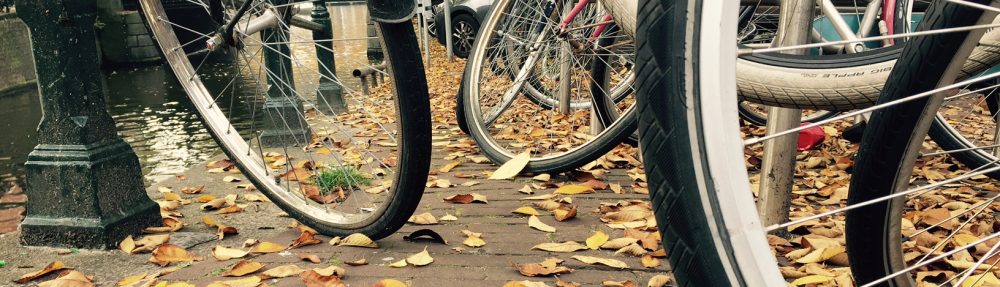
If Amsterdam was a season, it should definitely be Autumn. It constantly feels like you’re walking in a painting. This photo was taken in Vondelpark, a must visit for a stroll, a bike ride, a book read or just to sit on the grass and enjoy the silence (as long as it lasts; it’s pretty busy in summer)
Maastricht, what a beauty. It is one of my favorite cities in The Netherlands; old and picturesque. The red stones of Saint John’s cathedral make it unmissable.
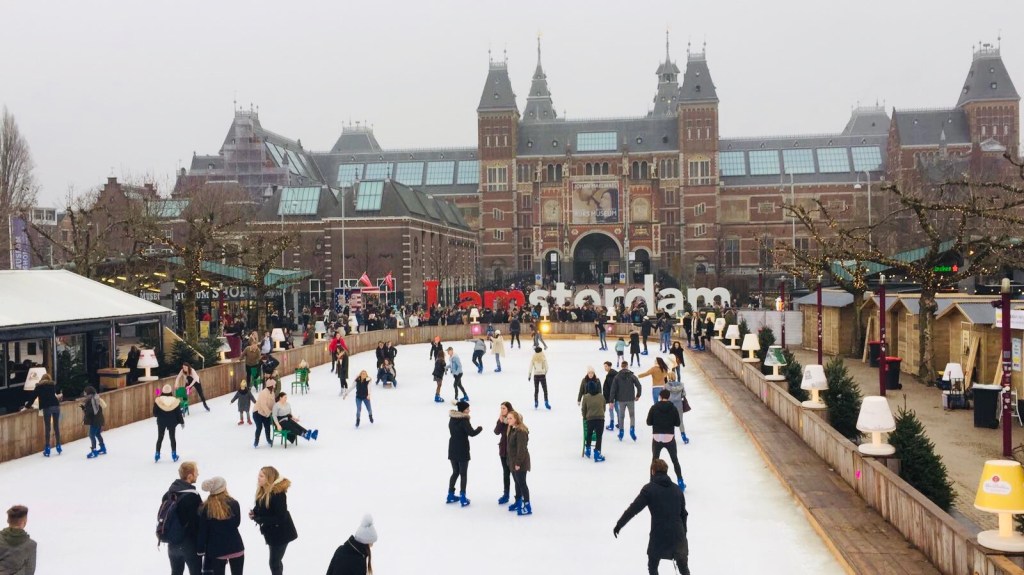
It’s beginning to look a lot like Christmas… Around the Rijksmuseum, you can smell hot chocolate, sausages, pea soup, glühwein and maybe skate. Using a chair is not frowned upon; no one expects you to skate like the Dutch.
I was riding my bicycle that day and for the first time I saw that the lakes were frozen. Small ducks were actually walking on ice. Again, I took this photo in Vondelpark.
The first time I was at the gay pride in Amsterdam was by chance in 2008, during a trip around Europe. It was amazing to see how free people can be, to be able to express themselves so openly. I am all for “extreme” (as a friend called such an event) celebrations of love if only to counter hatred towards the gay community in so many parts of the world. May love always win!
Salzburg, twenty years later. This city holds a special place in my heart. It is where I spent a three-months holiday with my sisters, met many interesting people, made friends and put on a lot of weight (thanks to schnitzels and potato salads). Those were incredible times.
Amsterdam by night. Doesn’t it look magical? I was told that all these lamps on the many canals of the city used to be lit by hand back in the eighteenth century. A walk by night here is a must to discover this place under a different light.
Save the best for last: the Bekaa valley. It is a high plateau between Lebanon’s two mountain ranges that serves as the country’s primary agricultural district. It is definitely worthwhile to visit the various towns and villages in and around it, to have lunch at a winery and enjoy the view. This photo was taken from Tawlet Ammiq restaurant.

The day I met Turki

In 2013, I worked for Save the Children Lebanon as a communications and media coordinator. That’s when I met Turki, who was a child at the time, with a heavy burden that no child should carry.

I met him in a tented settlement in the Bekaa Valley on a rainy April day, exceptionally cold and windy for Lebanon. I was accompanying a media crew from ABC Australia to meet new arrivals from Idlib and Aleppo in Syria – refugees who were living in tough conditions with irregular access to water, electricity and food.

On our way back, I noticed that more land on both sides of the road was busy with refugee tents and children running around.

Turki and his family were living there. They arrived from Syria two months ago, after Turki’s father had an accident, falling off the roof where he would sit watching the shelling and explosions. He was still depressed. Turki was in fact the breadwinner for the whole family: five younger brothers and sisters and his mother and father. He was 10 years old.

When I spoke to him, Turki was standing next to an old carriage piled with scrap metal he had been gathering from nearby streets. He was sorting out which pieces he could sell.

“I work every day from 7am until 1pm, gathering scrap metal here and there,” Turki told me. “Then I try to sell the pieces to adults, who scare me sometimes because they beat me”. He made around 15,000 Lebanese Pounds (approx 10 EUR) a day. “Life is not nice here,” he said. “I am sad because my father cannot work, but we need money and I have to bring food for my family.”

Huge responsibilities

A small boy, Turki had responsibilities that would daunt a grown man. His worried look was that of an adult, not a child. After his working day, he finally got to go home to his tent and played marbles with his friends and cousins. This was the only time I saw him smile.

His sisters and brothers were very shy and clung to their mother as if they were scared to leave her. None of them had been to school for the past two years.

Most Syrian children I met were excited to go back to school, make new friends and study for a better future, but not Turki. “I don’t like to go to school,” he told me. “Schools were shelled in Syria. They weren’t safe for us.” If the school were safe, though, he would be prepared to return – except that he had to work. “I don’t want to go back to school,” he said, “but I do hope we can return to Syria, to our home.”

In the meantime, Save the Children was providing help with shelter, education and child protection – necessities then and for the foreseeable future because as Turki said, with the wisdom of the maturity that was being forced on him too soon: “From what I see, it will be a long time before that can happen.”

Today on World Refugee Day, I can’t help but think that Turki is now 15, and still waiting for the deadly conflict to end in his country so he could go back.

Petiscos and Ginja*

Good wine, good food and good company are some of life’s most civilised pleasures, someone said. Add to that warm weather and Fado music and you’ll find yourself in Lisbon, one of the most underrated cities in Europe. If you appreciate the simple joie de vivre like me, you must visit this beautiful Portuguese city.

Time moves slowly and days feel longer, in a good way. People enjoy the warm, crisp evenings until well into the night, at least they did during my September visit, but still manage to go to work in the morning. During my short holiday, I made sure not to get up so early. My day started around ten with a short hop to the nearby bakery for coffee and delicious pastries, particularly pastéis de nata, my favourite. Then I was back to my small cozy apartment on the foot of one of Lisbon’s many hills to enjoy my sweet breakfast. Using Airbnb allowed me a glimpse of how locals live. After spending a week, people in my street started greeting me as if I’d  always been living in the neighbourhood.

Around noon, it is time to go out. Take one of the small and colourful trams that regularly go up and down the hills overlooking the water. Head to a viewpoint, or a miradouro, as the Portuguese call it. Each offers wonderful views: monumental architecture and buildings often decorated with blue, white or green ceramic tiles brought by the Moors in the Middle Ages; panoramic scenery; the city’s port; and the 25 de Abril Bridge, a smaller version of the Golden Gate Bridge in San Fransisco. Grab a drink and have a long break.

Getting hungry yet? I am. Alfama, the oldest district of Lisbon, has many places that serve traditional Portuguese gastronomy as well as international cuisine. I felt right at home, with the Portuguese custom of eating various small plates of food. Petiscos, similar to the Spanish Tapas and my own beloved Lebanese Mezze. And of course: Vinho Verde, the unique made-in-Portugal-only green wine; young, cool, summery, light and low in alcohol.

While walking around the streets of cobblestone in Lisbon, I made regular stops on the long stairs to look at the buildings. In some areas the difference between various constructions was staggering; completely renovated apartments with shiny ceramic tiles on their facades, standing next to almost crumbling houses with broken shutters and no windows. When I asked for the reason, I was told that many often elderly tenants pay extremely low rents, frozen by an old law decades ago. So the owners can’t afford upkeep, buildings are in shambles. It reminded me of Beirut: some policy set in motion at some point because it served some populist politician, or even seemed wise at the time, but nobody bothered to look at the long-term consequences.

The last economic crisis hit the country hard. Although it is recovering very slowly, many elderly have to live off pensions 250 or 300 euros a month, which allows for very little. Youth unemployment remains high, many people beg on the streets, people complain about corruption in various official departments. That’s how locals explained their current situation, a big contrast with the more prosperous Northern Europe. But I am no expert on Portugal, merely an observer and obviously a curious listener to whatever the locals have to tell about their country.

I still loved the vibe in Lisbon. It feels way more leftist and hippie than in Amsterdam: more graffiti, young people never seem to be in a rush, the streets are full with endless kiosks, small casual restaurants and bars – rather than luxurious or sophisticated diners –  prices are affordable. The coast is lined with a sandy beach, the water looks super clean. It is the perfect location to watch the sunset. Grab a glass of cold Sangria and sit on a bench to enjoy the amazing tones of orange, pink and yellow.

All in all, an ideal destination for a long and relaxing stay.

*Ginja is a sweet cherry liqueur that originated in Lisbon. You can drink it in a small chocolate shot and the trick is not to eat the shot in order to have a refill. It’s terribly good.

If I could vote in The Netherlands

I have never voted. I’m not proud of it, but in my country elections’ results are usually known way in advance. Besides, you can only vote for candidates in the village where your father comes from (or your husband, after you marry) – don’t get me started on women’s rights – even if you have never lived there. Or if it’s on the other side of the country. So your choices are quite limited. And pointless. Lebanese politicians also often manage to pass on their position to their sons, sons in law or cousins (by mobilising or intimidating enough people to vote for them).

Some of them don’t age or die. I remember that when I was a kid, I thought our speaker of parliament was a vampire. He has been holding his position for over 25 years and he looks exactly the same as when I was a kid. And acts the same. He just is. No matter how many elections pass by.

Now that I am in the Netherlands, and although I cannot vote (not yet at least), I am following the parliamentary elections closely. Like many Dutch, I turned to an online guide to know where I stand – obviously out of curiosity – in today’s elections. What you go through in this quiz, is a series of propositions that have been debate topics or were brought up by the various parties. They focus on immigrants and refugees, culture and art, infrastructure, health care, euthanasia for the elderly, discrimination in recruitment, permanent and flex contracts, obligatory unpaid work for youth (only baby boomers come up with that), etc. You answer ‘agree’, ‘disagree’, ‘neither,’ or skip the question. And voilà, you get your parties ranked by percentage of agreement with your answers.

Being an immigrant amidst the rise of far-right politicians and populism in Europe made me want to understand as much as possible the changes that are happening to the Dutch political scene as they will affect my life in the next four years. I answered all 30 questions in the quiz, with my husband explaining from time to time some Dutch words I did not understand and of course trying to influence my answers. It did not work though, I was pretty firm with him.

At the Top 1 and 2 were Denk and Artikel 1 at 66%, with ChristenUnie at 62% and D66 at 59%. I didn’t expect these results, especially that I never heard of Denk or Artikel 1 before. My first choice was actually D66 followed by GroenLinks. The bottom line is that you need to have a thorough look at the history and future plan of every party before you vote. As I heard, some parties – like the PvdA (labor party) – have made many promises in the past that did not lead to positive results in practice.

Polls close at nine in the evening and preliminary results are expected around midnight. Here’s to hoping.

A quirky language called Dutch

Why on earth would somebody spend countless hours on a language hardly anybody speaks outside this small country – except in other small countries as well? On my way to De Vrije Universiteit where I started following Dutch classes, I repeat phrases and – frankly – sometimes ridiculous words on my bicycle trying not to get hit after a long workday.

In between moving and settling in The Netherlands, I stopped taking lessons but I tried to keep up by going to meet-ups with expats to practice some Dutch together, read magazines, follow the news, listen to the radio and to popular Dutch songs, and watch TV – mostly “De Wereld Draait Door”, a play on words meaning both ‘the world keeps on turning’ and ‘the world is spinning out of control’. My Dutch has improved to the extent that I now confuse it with Spanish, which I learned in my early twenties at university.

Although most people speak English here, and you can certainly spend your entire life not learning the local language, I figured that if I don’t, I will never really get to know the country or feel at home. So I embarked on a long discovery of one of the quirkiest languages I’ve ever studied (I speak three fluently and have taken classes in several others, like German, Spanish and Japanese). Being a linguist and a translator, I couldn’t help but try to find similarities and differences between Dutch and Arabic, my mother tongue. One of the very few things the two languages have in common is: the letter “kh” or “خ” (the hard, guttural ‘g’, as written in Dutch). That’s just about where the resemblance stops. Arabic is more sophisticated, way less direct, very poetic and musical – although this may seem hard to believe when most Arab men and women you see in Homeland are angrily shouting all the time. But really, we can sing too.

If I compare Dutch to French or Spanish, “beautiful” is perhaps not the first (or second) adjective I would use to describe it. With time though, I actually got to love the language, including the sound of it. To my advantage, the Dutch have borrowed many French words as they were once occupied by France – a historical fact that no one likes to talk about. Words like: abonnement, argumenteren, bizar, champignon, formulier, hypotheek, illegaal, paraplu, pauze, plafond, situatie, among others come from French. This is great news for me as it expands my Dutch vocabulary with little to no effort.

Sadly, learning this new language is not just for fun. Since I arrived to The Netherlands a year ago, I have been receiving a letter every couple of months urging me to learn more Dutch by mid 2019 (Three letters so far!). No directions as to where to do it, really, just a letter in Dutch saying I have to learn the language and threatening consequences if I don’t. More on that in another blog post.

When I was little, my father used to tell me that learning multiple languages is like having several personalities. It opens up your horizons and allows you to learn about different cultures. As a Lebanese, I grew up speaking two languages, Arabic and French and was taught English at a later stage in school. Speaking several languages was a natural thing for me (and many other Lebanese) to do.

I find the Dutch language fascinating because it tells you so much about the people. It is so clear, logical and direct, which makes it totally different from Arabic, where words rarely carry a simple straightforward meaning. There are wonderful, tell-it-like-it-is words the Dutch have invented for various touchy subjects that reflect the character of this country most. For example:

– “Coffin” means “Tabout” or “تابوت” in Arabic which comes from the verb “Tab” or “تاب” meaning “to repent”. Quite a deep religious connotation right? In Dutch, “coffin” becomes simply “doodskist” which translates into “death-chest”. You see what I mean;

– “Dakloos” means literally “without a roof” or roofless and has the Arabic equivalent of “Mousharrad” “مشرّد”. The latter carries a deeper meaning which reflects the image of someone who lost his home or his land;

– Ambulance becomes “ziekenauto” or “a car for the sick” in Dutch. While in Arabic it turns into “sayyarat es’aaf” or “سيارة إسعاف” which means literally “a car for relief”;

– Earrings mean “oorbellen” in Dutch which translates into “ear bells” (for humans, not cows);

– Gloves become “handschoenen” or “hand shoes”;

– Pedestrian crossing means “zebrapad” or “zebra path”;

– Toilet seat means “WC bril” in Dutch which implies that the seat looks like one side of a pair of glasses;

– Dictionary is “woordenboek” or “book of words”. In Arabic, the word is “qamous” which refers to a great sea (of words, in this case).

I can go on. And just when I thought I found an equivalent in Lebanese Arabic to “gezellig” – the Dutch elaborate description of coziness, warmth and friends in one word – it turned out the word I found did not capture the entire meaning. I thought of “Moukankan” or “مكنكن” which is a very cute word implying feeling warm and comfortable in a small place, always with a bottle of red wine. Just joking on that last part. In fact, the word gezellig reminds me of “Toqborneh” or “تقبرني” which, in the same way, has no real equivalent in any language other than Arabic. It is said to a loved one and it means you wish to die before them, thus them burying you so you never have to live a day without them. Gezellig hè? I don’t think any word in any other language can beat that.

So there you have it, a language mixing various influences and cutting out any overly tedious attempts at softening or dressing up the meaning of things. Kind of like the Dutch. It can be a breath of fresh air, this bluntness. But sometimes, I long for the promise of something mundane carrying the potential meaning of vast and dreamy; a great sea yet to be discovered. Even if it’s only a book of words.

A Short Getaway

One of the advantages of freedom of movement and open borders is the possibility to book last minute trips and travel around Europe. Or the world, even – but only if you are lucky enough to have a Western passport and thus can get visas on arrival to practically anywhere. As someone who comes from Lebanon, a small country bordered by war-torn Syria on one side and a not so friendly neighbour Israel on the other, I love my newfound luxury to travel freely to various European cities.

The Lebanese passport does not make things simpler. Its current global power rank is at 85, same as North Korea according to the passport index list for 2016. This gives you a pretty good idea on the bureaucratic “torture” Lebanese citizens have to endure to be allowed into almost any other country- unless of course, they hold a second passport from the US or EU, which many do. Being Lebanese means having to apply for a visa (long) in advance, through foreign embassies in Beirut, for almost every destination EU citizens can just hop on a plane to. Only 39 countries, which you can find here, give us a visa on arrival.

Some Lebanese blame it on the Lebanese Minister of Foreign Affairs and Emigrants who, they say, is not doing his job including, but not limited to promoting and maintaining positive diplomatic relations with other countries. Others say it’s because of Hezbollah who, let’s face it, dominates many of the Lebanese government’s decisions and is not appreciated by a considerable number of countries worldwide. But I won’t linger on this. What matters here is that I used my access to those open EU-borders to have a short hop of my own, to pretty Milan and Bologna!

Italy was the first European country I ever visited. I was fourteen when our high-school director organised a two-week trip to Rome, Florence and Venice.  More than fifteen years later I went back to visit other Italian cities. All I had to do this time, was show my Dutch residency and get on the plane. It was probably the smoothest trip I’ve ever had. Although an hour and a half away only, temperatures were considerably higher, making me feel right at home; it was an actual real summer. During the six-day trip, all we did was walk around, visit museums and of course churches, attend musicals, eat and drink. In order to avoid putting on two or three kilos, I highly recommend you do a lot of walking; enjoying the Italian cheese and charcuterie delicacies at the many ristorante, trattoria and osteria comes at a high price.

Between Milan and Bologna, I fell for the latter: the small streets, the pinkish and yellow buildings, people’s generosity and sense of humour. Bologna is a very charming place, away from drunk and loud tourists. Calmer locals, calmer tourists, calmer everything. But most of all, the Italian language. It is simply so beautiful to listen to that you end up speaking English with an Italian accent. I’ll definitely go back to Italy again soon.

Born to Leave

Amsterdam on a (mildly) warm day

I was doing well back home in Beirut. I had what I thought was all I needed: a loving family, wonderful friends, a great job. Everything seemed perfect in my own little circle. But it was a circle that I had created, like many other Lebanese, to shield myself from the dysfunctional mess around me. Finally, I couldn’t keep the outside out anymore. So I tried my luck here in Amsterdam. And what a change it’s been. 

Beirut was my city. It’s chaotic, and full of character. It blends the old with the new, the rich with the poor, the Arab world with the West. Its streets and suburbs are a colourful mess: shiny new sky scrapers mix with traditional two-story houses and pitiful shacks. It is on the Mediterranean, so with the smell of salt a feeling of freedom continually washes over the city. And it’s true: Beirut is open, tolerant, even liberal compared to the rest of the Arab world. At least, in my circle it is. Its character is fuelled by its people, talented, creative, smart, hip, but also deeply disturbed, to be honest.  

I love Beirut like you love a destructive lover, who keeps you hanging on with hints of how it could be, how it should be. Until the moment you realise you have to leave, if only to maintain your health and sanity.  

So here I am, taking a walk on a sunny Amsterdam day along the dozens of waterways and canals, heading toward Oost. I sit on a bench for a long time listening to the sound of the light breeze through the long trees, watching a couple of ducks float on the water, enjoying the summer sun as the tram bells echo in the background. Everything is so peaceful, so clean. I think of when I started learning Dutch in Lebanon and how surprisingly fun the classes were. Then I remember the day I learned my residency was in order, and how ready I felt to go.  

Beirut does not have an easy past. After a 15-year long civil war which left so much destruction on its buildings and in the hearts of its population, its problems now are more mundane: lack of water, power cuts, pot-holed roads, suffocating traffic, and not a single publicly accessible park worth the name. An ongoing trash crisis – the result of incapable, corrupt, money-hungry politicians – has made the streets of Beirut smell like a garbage dump for the past year, with no solution in sight (despite creative and angry protests). And then there are the more than 1.5 million Syrian refugees (on a Lebanese population of 4 million), which is putting extreme pressure on the already weak local infrastructure and public services. Religious and political tensions, staggering economic and social inequality – it’s all widening the gap between the rich and poor.  

It all seems so far away here, as if I’ve driven into a morning fog on a dark forest road and came out on the other side in daylight. Amsterdam feels magical, like a dream, with its incredibly beautiful architecture and lit canals. And the green; I can’t emphasise enough how great it is to be able to access parks for free, just sit there, read, spend time with friends or exercise in the morning in the fresh air. Nothing can beat a bicycle ride – no matter how challenging it may look with all the confused tourists around – through the endless small streets feeling the wind on your face. It’s ultimate freedom.  Everything works. While this may seem like a fact-of-life for those living in a developed country, it makes me realise the collective commitment and effort that have been put into it, to have a well-functioning society. Every detail has been thought of: the alignment of trees on the sides of the roads, bike lanes, parking spots, parks, where to stick posters (RIP, Johan Cruyff) and ads, where to post your mail, how to sort the trash, where people with disabilities can go, children, bus stops and the list goes on and on. I was even able to become a fiscally legal ZZP’er (self-employed person with no personnel) in less than a month. This is a miracle!  

I love Beirut’s generosity, its hospitality, how it embraces you and makes you feel home, welcome. But after years of disappointment, I had to leave; because I want to build a stable life and make a new place home. So here’s my first post on the struggle to achieve that in Amsterdam. There are problems too – the hardness of society here is one. But more on that later. I’ll keep you posted, those of you going through the same process, or Dutch people interested in what it’s like to arrive here, while I wonder about my new life, in this new city. Hopefully, this one will make a better lover.